
 To increase
Last issue special issue
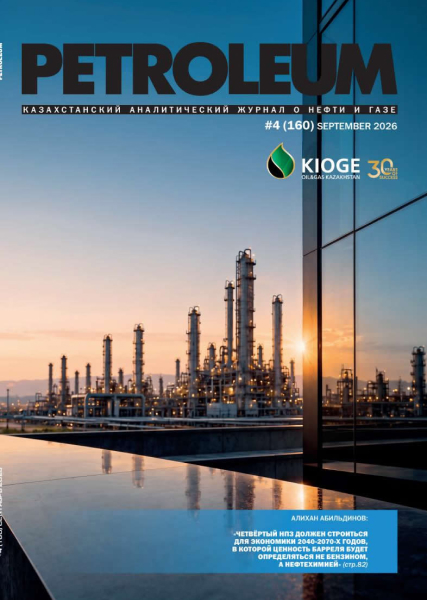
#4 (160), September 2026
KIOGE Oil & Gas Kazakhstan. 30 Years of SuccessPolitics
Kazakhstan After the Reset: What System of Power President Tokayev Is Building

Since the spring of 2026, Kazakhstan has effectively entered a new political cycle. In the space of a few months, the country has adopted a new Constitution, abandoned its bicameral parliament, elected the first convocation of the Kurultai, restored the institution of the vice-president (which existed in the first years of Independence), and carried out a large-scale reconfiguration of the state apparatus.
KIOGE-2026
Practically Every Strategic Issue in the Industry❜s Development Was Voiced at KIOGE

This year's KIOGE exhibition and conference is an anniversary event: it is being held in Almaty for the thirtieth time. Throughout those years, it has not merely been a meeting place for professionals; it has become a chronicle of sorts for the industry, reflecting its achievements, challenges, and hopes. On the eve of the anniversary, we are discussing the history of the exhibition and its role in the country's oil and gas complex with Uzakbay Karabalin, Hero of Labour of Kazakhstan and Deputy Chairman of the KAZENERGY Association.
The Era of «Easy Oil» is Over: How Kazakhstan❜s Oil and Gas Industry is Changing
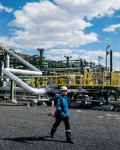
While analysts are revising forecasts for global oil prices amid global instability, the oil and gas industry itself is changing. Until recently, large hydrocarbon reserves were considered the main advantage. Today, modern oil and gas projects compete through technology, digital solutions, industrial safety, artificial intelligence, and the efficiency of every dollar invested. We look at how these trends are reflected in one of Kazakhstan’s largest industrial projects, the Tengiz field.
From Supplies to Capabilities: How Kazakhstani Content Is Changing at Tengiz

Over more than three decades of work at the field, Tengizchevroil LLP (TCO) has traveled the road from a company that had to build up a circle of local suppliers virtually from scratch to the largest customer for Kazakhstani business. Over that time, not only have the volumes and the range of procurement changed. The very character of the relationship between the country's leading oil and gas operator and domestic enterprises has been changing. The process has advanced step by step: from finding and engaging local suppliers to developing manufacturing capabilities, certifying products, and creating new production facilities.
Women❜s Perspectives on Oil Production Forty Years of Kumkol: Five Stories of Professional Dedication, Responsibility, and Life-Changing Choices
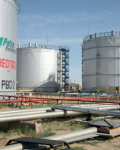
Forty Years of Kumkol: Five Stories of Professional Dedication, Responsibility, and Life-Changing Choices
The history of Kazakhstan's oil industry includes fields that have become far more than industrial assets—they have evolved into centers of professional excellence and engineering expertise. Kumkol, whose commercial development began forty years ago, is undoubtedly one of them. Over the decades, technologies, production processes, and management practices have continued to evolve, but the driving force behind the field's success has always remained the same: its people.
Polyethylene: New Stage in Kazakhstan❜s Industrial Development
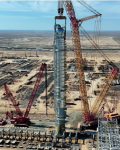
Petrochemical industry development has become one of the key priorities in Kazakhstan’s efforts to diversify its economy. In an increasingly competitive global environment, greater emphasis is being placed not only on the export of raw materials, but also on establishing domestic manufacturing facilities that produce high value-added products, strengthening national industry, and creating new export-oriented sectors.
From Extending Equipment Service Life to Building New Process Complexes. AVC Production solves complex engineering challenges at Kazakhstani refineries
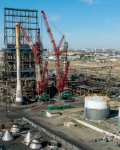
AVC Production solves complex engineering challenges at Kazakhstani refineries
Until comparatively recently, the modernisation of Kazakhstan's refining capacity was associated above all with the construction of new process units, the increase in refining depth, and the shift to producing motor fuels of higher environmental classes. These objectives largely shaped the industry's development over the past two decades. Today, the projects coming to the fore are not necessarily linked to expanding production capacity, yet it is precisely on them that the reliability of operating facilities, product quality, compliance with environmental requirements, and the overall efficiency of refining depend.
Improving Reliability in Refineries and Petrochemical Plants
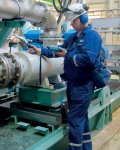
A practical view on how a proactive approach to lubrication, oil condition monitoring and maintenance can help identify problems before they lead to failures and unplanned downtime. Taking European experience to Kazakhstan’s refining, gas-processing, petrochemical and heavy industry sectors.
ILF❜s international experience brings industry best practices to Kazakhstani projects

Exclusive Interview with Ivan Circelli, Managing Director of ILF Consulting Engineers in Kazakhstan, for Petroleum Magazine
– Over the past years, Kazakhstan’s oil and gas industry has undergone significant transformation. In your view, how has the role of international engineering and consulting companies evolved in the development of major energy projects in the country?
RV-Oil&Gas: From Oil Trading to Vertical Integration

Over 16 years, the Kazakhstani company RV-Oil&Gas, part of R1 Energy Group, has travelled the road from trading in petroleum products to creating its own infrastructure, delivering airport projects, and entering subsoil use. The company’s strategic goal is to build a vertically integrated model covering the entire chain, from the resource base to the end consumer.
Why Transfer Your Pension Savings to a Private Management Company

An interview with Ruslan Zerilov, Managing Director of BCC Invest
Since 7 September, Kazakhstanis have had the right to transfer up to 100 per cent of their pension savings from the Unified Accumulative Pension Fund (UAPF) to management by private investment companies. This change significantly expands the options for those who wish to choose the strategy for managing their pension savings themselves. How to choose a reliable manager, what risks exist, and what guarantees are in place — we explore these questions with Ruslan Zerilov, Managing Director of BCC Invest.
Projects
The Fourth Refinery: A Deal the Country Makes with Its Own Future for Half a Century
Alikhan Abildinov, expert in chemical technology of organic substances
On the global pivot to the crude-oil-to-chemicals (COTC) model, on a product slate that does not duplicate what has already been built, and on why the choice of site for a new plant in Kazakhstan is, first and foremost, a choice of a source of water and energy, and not of the distance to the oil field.
Oil Chronicles
Oil Chronicles. May 2026

May
May 6, QazaqGaz published a USD 1.5 bln bond programme running until the end of 2030, under which it placed a first tranche of USD 1 bln for a 1-year term at a coupon rate of 5.5% per annum. The funds raised will be used to finance the construction of the second line of the Beineu-Bozoi-Shymkent main gas pipeline. The pipeline will be 1,452 km long, with construction expected to be completed in December 2026. The project is being implemented by Beineu-Bozoi-Shymkent 2 Ltd, a company registered at the AIFC and a joint venture between QazaqGaz and Qatar's UCC Holding.
Oil Chronicles. June 2026
June
June 4, Gazprom signed an agreement with the Republic of Kazakhstan on additional gas supplies in 2026. "The parties gave a high assessment to the strategic partnership in the gas sphere. In particular, they noted Gazprom's significant contribution to ensuring reliable gas supplies to the republic and to strengthening the energy security of Central Asia," Gazprom said in a statement. The volume of the additional supplies has not been made public.
Oil Chronicles. July 2026

July
A plan for the development of promising new hydrocarbon fields through 2035 has been approved in Kazakhstan. As Minister of Energy, Yerlan Akkenzhenov reported at a government meeting that the main aim is to create a systematic, phased mechanism for developing new oil and gas fields to ensure a sustained buildup of the hydrocarbon resource base. In all, the plan covers 30 subsoil blocks.
Legislation
Kazakhstan❜s Oil and Gas Tax Regime: Key Changes introduced in 2026 and the Upcoming 2027 Reform

On 1 January 2026, Kazakhstan’s new Tax Code came into effect, retaining the basic structure of taxation in the oil and gas sector while introducing several significant changes to the taxation of subsoil users. The most important changes relate to the treatment of costs incurred during exploration and preparation for production, the rules for establishing liquidation security, the expanded application of the alternative subsoil use tax (ASUT), and the future reform of the mineral extraction tax (MET) scheduled for 2027.
| © ТОО Издательский дом PETROLEUM. 2000 - 2026 Республика Казахстан 050000 г.Алматы ул. Наурызбай батыра, 58, офис 12 Тел: +7 (727) 258-28-38 Факс: +7 (727) 250-50-82 https://www.petroleumjournal.kz/ | .Без письменного разрешения редакции перепечатка материалов Petroleum не допускается. При использовании материалов активная ссылка на PETROLEUM обязательна. Журнал перерегистрирован в Министерстве информации Республики Казахстан 14 октября 2003 года. Регистрационное свидетельство № 4310–Ж. |