


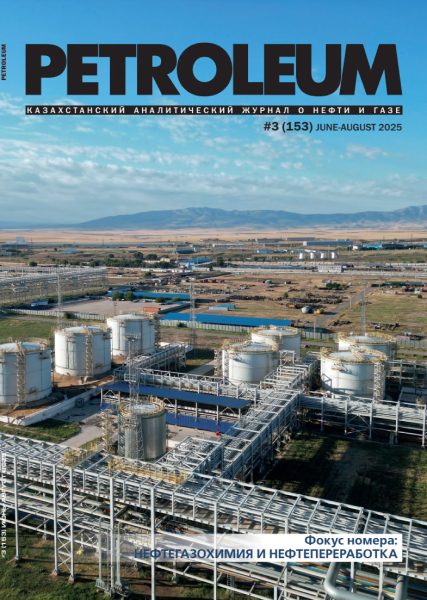
Petrochemistry and oil refining
The Working Professional: An Inside Look at Key Oil Production Trades

This year has been declared the Year of Skilled Trades in Kazakhstan. Indeed, workers stationed at drilling rigs and metallurgical furnaces, in the control rooms of refineries and thermal power plants, play a pivotal role in the nation’s economy. Demand for highly qualified and motivated specialists in skilled trades continues to rise steadily across the country. Elements of digitalization, artificial intelligence, and automation are actively being introduced into technical competencies. Yet, just as in decades past, to be a working professional is still a title of pride.
Behind every ton of crude oil extracted and sent for processing stand not only cutting-edge technologies and state-of-the-art equipment but, above all, the people whose expertise, professionalism, experience, and dedicated labour ensure the sector's uninterrupted operation. Today, we introduce you to the employees of PetroKazakhstan Kumkol Resources JSC (PetroKazakhstan). These are individuals working on the frontlines of oil production, and we will hear firsthand about the nature of their work and what draws them to their chosen profession.

Nurbol Balgabayev
Fifth-Class Reservoir Pressure Maintenance Operator
Years with the Company: 21
Field: Kumkol
- How did you come to choose this profession?
– It was a conscious decision. In my youth, the oil and gas sector was seen as one of the most promising fields for employment. Many people pursued technical education in this area, understanding that it would ensure stability and a secure future.
I enrolled in the petroleum faculty, and my studies deepened my interest in the profession. Even then, I realized that oil and gas was more than a job. It was a way of life that demanded full commitment. That is how I entered this profession and have never regretted it.
– Do you remember your first day at the field? What did you feel?
– I remember my first day at Kumkol very clearly. It was November 21, 2002, when I officially started work as an oil and gas production operator.
The trip to the site began early in the morning. During the drive, I was filled with both excitement and anticipation. Everything was new: the environment, the people, the equipment, the work schedule. When we arrived, I was impressed by the scale of the production facilities. Throughout the onboarding process, I felt constant support from my colleagues, which helped me adapt quickly.

– What changes in the industry have you witnessed over the years?
– I have seen many changes, both technological and organizational. First, the level of automation and digitalization in production processes has increased significantly. In the past, much of the work was done manually and required the constant presence of an operator on-site. Modern systems for monitoring, remote control, and diagnostics are in place now. This has improved both efficiency and safety.
Second, there has been a shift in health, safety, and environmental standards. These standards have become stricter, and PetroKazakhstan devotes serious attention to them. Technologies that reduce harmful emissions are being adopted, and initiatives for the rational use of resources are being implemented.
At Kumkol, the characteristics of the fluid itself have changed over time. The oil has become more water-saturated, and the gas factor has increased. This is a natural consequence of reservoir aging. As a result, the company is applying new production enhancement methods, pressure maintenance, and more complex technological solutions for product treatment.

– What is your profession's most challenging and rewarding aspect?
– The most important aspect of working as an operator is the high level of responsibility. We handle hazardous substances, under pressure, in environments where even the slightest mistake can lead to serious consequences. You must stay fully focused at all times, closely monitor the technological process, know the equipment, and be able to make quick decisions in nonstandard situations. In addition, working on a rotational basis, far from family and in harsh climatic conditions, demands mental and physical resilience. But this is precisely what makes the profession so compelling. No two days are ever the same. You are constantly learning and advancing your qualifications.
What I value most is the people. The team you go through shifts with, carry out maintenance work alongside, and endure cold and scorching heat, becomes like a second family. This is a true man’s profession, where discipline, expertise, and mutual support are held in the highest regard.
– What are you most proud of in your career?
– That I chose the path of honest, hard work and stayed on it. I take pride in the fact that my job has always been stable and decently paid, and the company has consistently provided for that, offering solid working and living conditions and supporting its employees. Here, you truly feel that your contribution is valued.
– How have the technologies and equipment you use changed over the course of your career?
– When I started working at PetroKazakhstan in 2004, the technologies and equipment were quite outdated. For example, flow meters required constant calibration. The systems were not very precise, and issues with measurement accuracy were common. There were instances when incoming data contained minor deviations, and we had to manually verify and correct it.
However, over time, especially starting in 2010, there was a major shift toward more advanced technologies. Digital flow meters became the standard, and the equipment grew significantly more reliable and accurate. We began using modern meters and monitoring systems that comply with international digital standards. This greatly reduced errors, improved measurement precision, and made process control much easier.
Today, the company continues to upgrade its infrastructure, implement new technologies, and actively pursue environmental initiatives. For instance, since 2009, more than 95 percent of associated gas has been utilized, reducing emissions and improving energy efficiency. In 2024, an agreement was signed for the construction of a 400 MW wind power plant.

Toktar Berdibekov
Fourth-Class Well Chemical Treatment Operator
Years with the Company: 12
Field: Kumkol
– How did you enter the profession, and why did you choose this specialization?
In 2010, while working for the drilling company Sibu, I submitted my résumé to PetroKazakhstan Kumkol Resources JSC. Later, I was invited to take the qualification test. I did not pass the first time, but after preparing more thoroughly, I succeeded on my second attempt and was hired.
I have long aspired to work at PetroKazakhstan. As a student, I completed an internship here in 2009. That was when I saw how the company applied modern technologies and methods in oil production, and I was impressed.
– Do you remember your first day at the field? What were your emotions?
When I first arrived at Kumkol, I did not expect the field to be so vast and to have so many wells. I had doubts and fears: would I be able to handle the work and learn quickly enough, especially with the level of responsibility I was taking on? But thanks to the supportive team, I adapted quickly. Today, I can confidently say that my crew has become my second family.
– What is the most difficult and most interesting aspect of your job?
Due to the rotational schedule, the biggest challenge is being separated from family and children. The most interesting part lies in the nature of the job itself. Unlike central oil treatment facility (COTF) operators, we also travel to other fields to perform chemical well treatments. This variety makes the work more engaging.
– What are you most proud of in your career?
Our company ranks among the top ten in oil production and is one of the region's top three in environmental performance. That makes me proud. But above all, I take pride in the colleagues I have worked alongside for 12 years.
What types of treatments do you most often perform, and how do you ensure safety when working with chemical agents? Have there been any nonstandard situations?
We frequently use the following types of chemical agents:
- agents to prevent salt deposits
- metal corrosion inhibitors
- agents to combat aerobic and anaerobic bacteria
- demulsifiers for breaking down oil and water emulsions
During chemical well treatment, we always use full personal protective equipment. In addition, we take into account wind direction, the correct positioning of equipment, and the readiness of colleagues prior to starting operations.
Given the scale of the field, nonstandard situations occasionally arise. In such cases, I rely on my experience to resolve the issue quickly and effectively.

Gulnara Kurmanova
Fourth-Class Oil and Gas Production Operator
Years with the Company: 21
Total Field Experience at Kumkol: 33 Years
Field: South Kumkol
– Tell us how you entered the profession. Do you remember your first day at the field? What emotions did you experience?
– My professional journey at Kumkol began in August 1992. At the time, it was part of the Yuzhneftegaz association, where I started working as a warehouse operator in the Oil and Gas Production Department.
The field was already gaining momentum. Production had reached 1,300 tons per day, with 75 producing wells operating in free-flow mode. Drilling activity was underway across the area. Living conditions were basic and typical of fieldwork. New housing blocks had been installed for workers in the settlement of Vakhta-40.
The job was new, interesting, and came with a great deal of responsibility. I had to handle various materials and quickly learn the names of equipment parts without any formal background in the oil and gas industry. At the time, the OGPD team was small and close-knit. Our department was considered the most important unit at the enterprise—the heart of Kumkol—with experienced leadership.
Time passed, and many changes followed. Foreign investors came in. By recognizing Kumkol as a major industrial asset in our region and gaining considerable industry experience, I decided to enroll in the correspondence program at the newly established Petroleum Faculty based at the Kyzylorda Polytechnic School.
– What changes in the industry have you observed over the years?
– The field has expanded. New facilities have been launched, the workforce has grown, and new specialties have emerged. Working and dining conditions have improved, with new canteens opened in industrial zones and increased wages. Workplace and recreational safety now receive heightened attention.
With the arrival of investors, mechanized oil production became more prevalent, and new modern equipment has been installed to enhance operational efficiency.
– What is the most challenging and most interesting aspect of your profession? What are you most proud of in your career?
– The oil production operator role is one of the most demanding, as servicing and maintaining the operational condition of wells requires both technical expertise and physical stamina. The field’s harsh climate—cold winters, hot summers, and strong, prolonged winds—poses considerable challenges for any worker, especially for a woman.
Despite this, I have always approached my shift duties with full responsibility, standing side by side with my male colleagues.

Raushan Zhubanyaz
Fourth-Class Chemical Analysis Laboratory Technician
Years with the Company: 29
Field: Arysqum (KAM)
– How did you enter the profession? Why did you choose this particular specialty?
– My choice was guided by a natural inclination toward technical sciences and a desire to work with precise data. I have always pursued self-development and professional growth. The company offers excellent opportunities for training, which allows for the successful integration of theoretical knowledge with practical experience on the job.
– Do you remember your first day at the field? What emotions did you experience?
– I remember it as if it were yesterday: on a January morning, I was flown by helicopter to the Kumkol field. At the time, the company was named Yuzhneftegaz.
I was warmly welcomed by the team and taken on an orientation tour of the facilities and processing units. What I saw left a lasting impression on me: separators, storage tanks, pumps, wells, oil-lifting devices, and pipelines—their scale and power etched unforgettable memories in my mind.
– What changes in the industry have you observed over the years?
– I have witnessed significant transformations in my nearly 30 years with the company. Facilities and production units have expanded and grown, equipment and instruments have become more advanced, and analysis results have become more accurate. The work has become easier in terms of precision and speed, but it also demands continuous learning and adaptation to new equipment.
– What do you take the most pride in throughout your career?
– I take pride in being part of a large, stable company where my efforts and labour are valued. I have received commemorative medals and letters of appreciation from the trade union and the KAZENERGY Association, and I earned second place in the national industry competition for technical inspectors. This job contributes to broader success, and I feel a sense of responsibility and fulfillment.
– Do you have any professional traditions or superstitions?
– I follow national traditions that are an integral part of our culture. I enjoy congratulating colleagues and receiving greetings on our professional holiday – Oil Workers’ Day. For a strong-spirited individual, superstitions have no place, as they interfere with performing one’s duties and achieving goals.
– What types of analyses do you perform most frequently?
– In the chemical laboratory, the most frequently performed analyses involve sampling from storage tanks, wellheads, and automated monitoring systems, as well as determining water content and fluid density, content of chlorides, mechanical impurities, vapor pressure, petroleum products, and sulfur.

Kyzylkul Saktapova
Fifth-Class Dehydration and Desalting Unit Operator
Years with the Company: 33
Field: Kumkol
– Tell us how you entered the profession. Why did you choose this specialty?
– My path into the profession was a long one. After finishing school, I worked in various places. In 1985, while employed at a gas refuelling station, my colleague and I were sent to study at the Almaty Polytechnic Institute (KazPTI). We were encouraged by saying, “You’re young, go study.”
To be honest, at the time, we didn’t even know what specialty to choose. We had heard very little about oil production. The female students we met there suggested we apply to the program in “Development and Operation of Oil and Gas Fields.” That’s how I became an oil worker.
– Do you remember your first day at the field?
– I arrived at Kumkol for practical training in 1992 and had been eagerly looking forward to it. I really wanted to see the field with my own eyes. I was shown how daily samples are taken from the wells, pressure is measured, and many other tasks are carried out. The wells were located far from each other, and I still remember how we drove from one to another along steppe roads.
– What changes have you noticed in the industry over the years?
– There have been many changes. For example, we didn’t have computers back then, and now we can’t imagine working without them. The pipes, heaters, and instruments have been upgraded and replaced with modern equipment. And of course, there have been huge changes in day-to-day life. I remember when we first started, the cafeteria didn’t even have enough dishes. We would stand and wait for plates and utensils to be freed up to eat lunch.
– What is the most challenging part of your profession, and what is the most interesting part?
– The hardest part is being far from our families, while still having to manage household issues over the phone. We literally work with fire, in a potentially hazardous environment – this is not easy, especially for women. What’s interesting is how absorbed I become in the work, to the point that I don’t notice time passing, especially when doing production accounting.
– Do you have any professional traditions or superstitions?
– Before every shift, I always pray, asking for the day to pass calmly and safely, and for Kazakhstan’s oil not to run out, so that it remains for future generations.
– What substances and processes do you work with at the unit on a daily basis?
– My work involves monitoring and recording incoming volumes of oil, water, and gas, which must be documented every two hours. I oversee the operation of various equipment, including separators, heaters, and storage tanks. When pressure changes occur, alerts are triggered, and I determine their source before contacting the personnel assigned to those areas. I respond in case of abnormal situations.
The stories of our featured professionals represent only a small part of the dedicated work carried out by specialists in Kazakhstan’s oil industry. Their example inspires the younger generation toward constructive labour that strengthens the national economy and helps build a stable future.
The stories of Nurbol, Toktar, and Gulnara are just a glimpse into the broader community of true professionals working across the oil sector…