



KAZAKHSTAN ENERGY WEEK - 2025
Yerlan Akkenzhenov: «Our Goal Is to Transform Kazakhstan from a Raw Material Supplier into a Producer of Advanced Technologies»
Increase oil production to 100 million tons per year, construct a fourth refinery, and transform the country into a hub for advanced petrochemicals. In an exclusive interview with Petroleum, Yerlan Akkenzhenov, Minister of Energy of the Republic of Kazakhstan, explained how the country intends to transition from being a raw material supplier to a producer of advanced technologies, and why protecting the interests of domestic businesses has become its top priority.
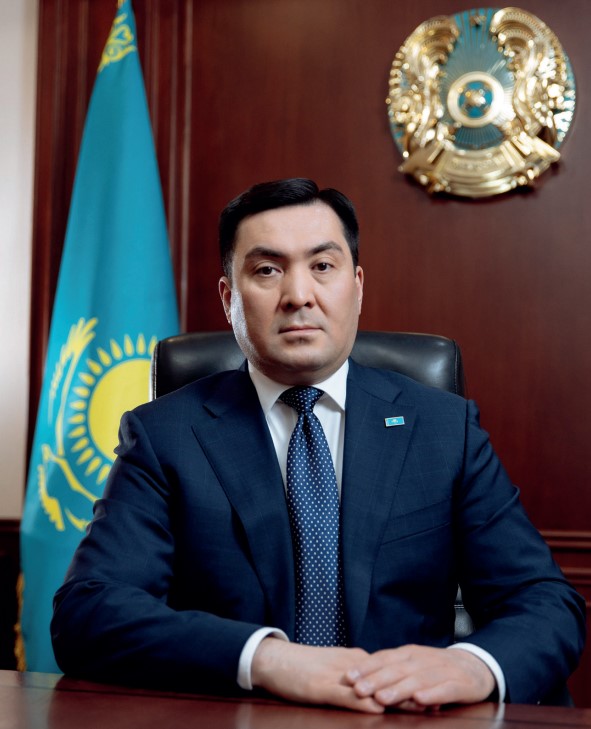
Who are you, Mr. Akkenzhenov?
Yerlan Akkenzhenov has headed the Ministry of Energy of the Republic of Kazakhstan since March 2025. He was born in 1979 in Almaty. He graduated from the Adilet Higher School of Law with a degree in jurisprudence and from Astana University with a specialty in oil and gas engineering.
He began his career as Lead Specialist, Lead Manager, and Director of the Department for the Export of Oil and Petroleum Products at Trading House KazMunayGas JSC.
In 2006, he interned under the Kylysh program as a crude oil trader at ChevronTexaco Global Trading in the United Kingdom. Following this, he headed Trade House KazMunayGas in Singapore.
Between 2006 and 2011, he served as Director of the Department for the Export of Oil and Petroleum Products at Trading House KazMunayGas JSC, Commercial Director of Kazakhoil Aktobe LLP, and Adviser to the General Director of KazMunayGas Onimderi JSC.
In 2011–2012 he was Director of the Department for the Export of Oil and Petroleum Products at KazMunayGas Refining and Marketing JSC; in 2013–2014 he was Deputy General Director and then General Director of Rompetrol Bulgaria.
Between 2014 and 2016, he worked at KMG International (Rompetrol) in Romania, serving as Chief Officer for Oil and Petroleum Products Trading, Chief Retail Officer, and Adviser to the General Director.
From 2016 to 2020, he worked in private companies involved in the refining and transportation of oil and petroleum products. In 2022–2023, he served as Head of the Petroleum Products Marketing Department at KazMunayGas.
From June 21, 2023, to March 19, 2025, he served as Vice Minister of Energy of Kazakhstan.
– Yerlan Kudaybergenovich, what are Kazakhstan’s priorities for developing the oil and gas industry over the next five years?
– Our main priority for the near term is the transition from the role of a raw material supplier to the status of a producer of high value-added products. We will continue implementing projects at Tengiz, Karachaganak, and Kashagan, which will ensure growth in production and budget revenues. However, the primary focus will shift to deep processing.
This means the development of petrochemicals, where output has already almost tripled, from 190,000 tons in 2021 to 540,000 tons this year. We will stimulate processing, deepen localization, and develop low-carbon technologies, including CO₂ capture, gasification, and emissions control — all of these areas have already been initiated.
Our goal is to lay a strong foundation for the energy of the future.
– What do you see as the drivers of further growth in oil and gas production in the country?
– Indeed, oil production in Kazakhstan is increasing every year. Based on the 2024 results, production totalled 87 million tons. In 2025, growth to 96 million barrels is planned, driven by expanded production at the Tengiz field and the development of projects at Karachaganak and Kashagan. Kazakhstan is preparing to surpass, for the first time, the 100-million-ton mark of oil production per year, which demonstrates the steady development of the industry.
At the same time, our key growth driver is the petrochemical industry. It can facilitate the deep processing of feedstock and the creation of new points of economic growth.
Last year, a Roadmap for the development of the petrochemical industry through 2030 was approved. Implementation of six major projects is planned, attracting $15 billion in investment and creating approximately 20,000 jobs.
Among the key areas are the construction of plants for the production of butadiene, polyethylene, and urea. The polyethylene project stands out in particular, as it will become one of the largest industrial undertakings in Kazakhstan’s manufacturing history. A polypropylene plant with a capacity of 500,000 tons per year has already been launched.
The implementation of these projects will allow Kazakhstan to significantly increase the depth of hydrocarbon processing and strengthen its position in the global market.
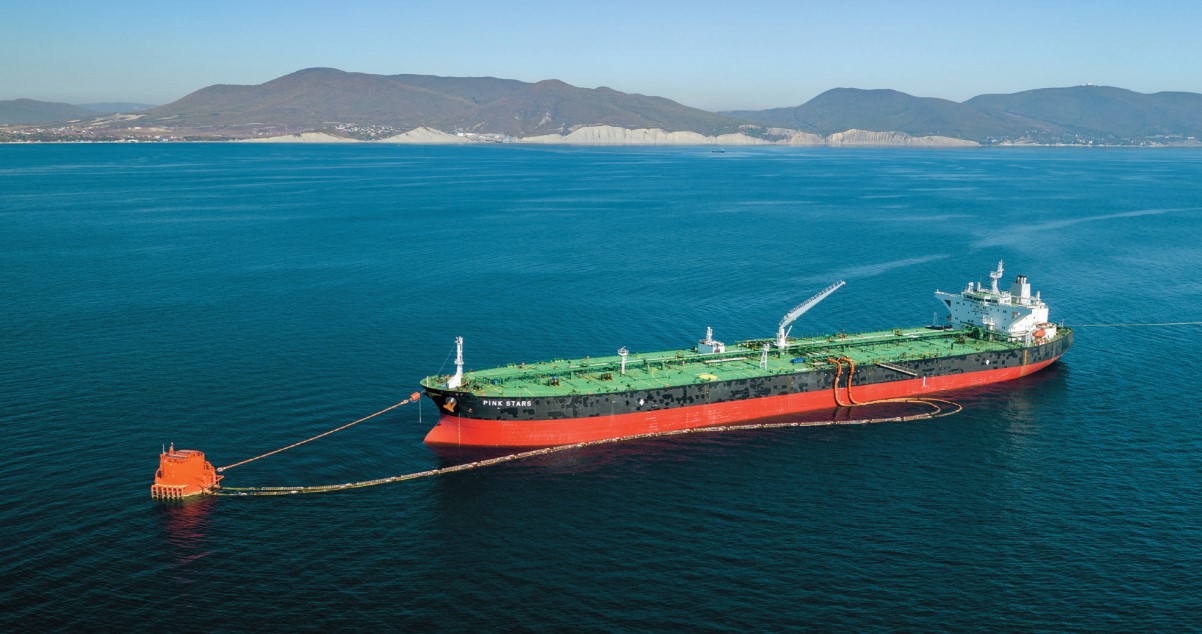
– How does the ministry assess the current state of oil exports amid geopolitical instability and the country’s near-80% dependence on a single export route?
– The ministry recognizes the importance of diversifying export routes and is actively working on developing alternative paths. Since 2022, in accordance with the Head of State’s instructions, we have been working intensively in this area.
Agreements have already been reached, and tanker deliveries are being carried out across the Caspian, then onward to European markets via the Baku-Tbilisi-Ceyhan pipeline. The Azerbaijani side has expressed its readiness to gradually increase export volumes.
Currently, in collaboration with the shareholders of major oil projects, a further plan is being developed to increase the transit volumes of Kazakhstani crude.
Since February 2023, supplies of Kazakhstani crude to refineries in Germany have begun via the Druzhba system. Cooperation with China on existing oil pipelines is also being strengthened.
The ministry’s main task is to ensure the uninterrupted export of oil and the reliability of supplies to our partners. Kazakhstan maintains its status as a reliable supplier of energy resources.
– The country has set a course for developing petrochemicals. At the same time, it has not been possible to begin full-scale exports of basic oil products, gasoline and diesel fuel. Why, and what is next for the refining sector?
– The modernization of refineries was indeed aimed at fully supplying the domestic market, and we have accomplished that task 100 percent. However, we see that the economy and population are growing faster than forecast. Exports did not start not because we cannot, but because our absolute priority is stability within the country. To create real export potential without risks to the domestic market, we approved the Concept for the Development of the Oil Refining Industry through 2040.
Within its framework, we plan to increase the combined capacity of the three operating refineries from 18 to 29 million tons per year. This will yield concrete results: gasoline production will rise to 8 million tons, diesel fuel to 9 million, and jet fuel output will nearly double to 1.5 million tons per year.
But we look further ahead. According to forecasts, Kazakhstan’s population is expected to reach 27.7 million by 2050. Calculations already indicate that even with the expansion of all three refineries, a new diesel fuel deficit may be possible by 2036.
To avoid this, it is necessary to begin the design of a fourth refinery with a capacity of about 10 million tons per year. Such a plant will become the core of a future petrochemical cluster.
– What measures is the ministry taking to support Kazakhstani oilfield services companies?
– Development of Kazakhstani content is one of the key strategic directions. Our goal is to make the sector more inclusive for domestic business.
The ministry is implementing roadmaps for the localization of production. Monitoring of subsoil users’ procurement has been strengthened, supplier forums are being held, and special attention is paid to the digitalization of procurement.
Already today, on several major projects, the level of Kazakhstani content exceeds 50 percent. As an example, at the insistence of the Kazakhstani side, a large tender for the purchase of metal structures was recently suspended to revise it in favour of domestic plants. This is our practical work in action, not just monitoring but direct measures in the interests of our business.
– In your view, where is the “golden mean” between increasing oil production in the country and the global trend toward decarbonization?
– In accordance with the Strategy for Achieving Carbon Neutrality through 2060, Kazakhstan has set a course for low-carbon development. We do not see a contradiction here; we see a task – to make our hydrocarbons among the cleanest in the world. This includes reducing emissions through the introduction of energy-efficient technologies and support for R&D.
In parallel, we are actively developing the RES sector. As of today, 156 facilities with a total capacity of 3,122 MW are operating in the country. This year, the commissioning of nine additional facilities is planned. Kazakhstan is actively cooperating with strategic international investors, who have a combined project portfolio of 4.8 GW.
At the same time, small-scale generation is also being developed through the net consumer mechanism. Kazakhstan is steadily moving toward its sustainable development goals, demonstrating that it is possible to be a strong oil and gas nation while simultaneously building a modern, green economy.