



KAZAKHSTAN ENERGY WEEK - 2025
Free Pricing in Kazakhstan: A New Era Begins for the Central Asian Petroleum Market
Rassul Abdukhalilov, General Director of RV-Oil&Gas LLP
As of February 1, 2025, Kazakhstan has officially lifted state regulation of gasoline and diesel fuel prices. This decision marks a turning point in the country’s energy sector and carries far-reaching implications for both the domestic market and the Central Asian region.
Why does the current regulatory model no longer meet the needs of the industry?
Historically, regulatory measures have helped contain inflation and maintain social stability. However, this model has long become obsolete and has led to several other problems, including:
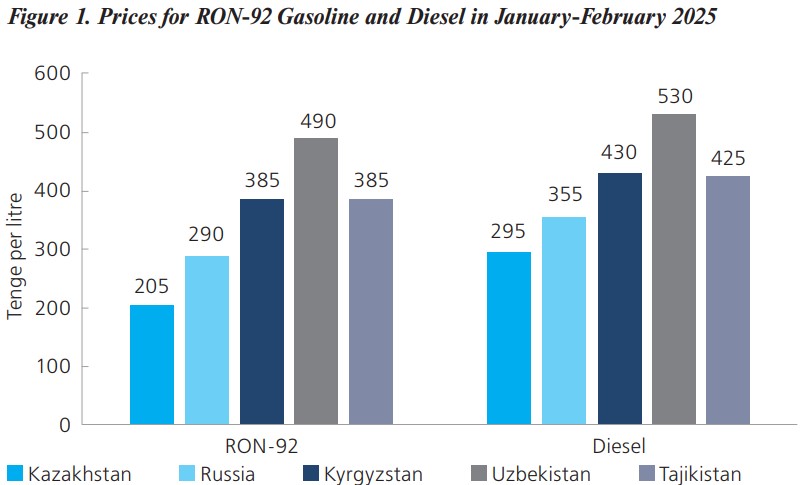
- Fuel prices in Kazakhstan are significantly lower compared to neighbouring countries, resulting in the illegal export of 10,000 to 50,000 tons of fuel per month.
- The domestic market suffers from shortages, particularly during peak consumption seasons.
- Price regulation reduces the investment appeal of the sector, which in turn holds back the construction of new processing facilities.
- Due to fixed prices, a disparity in profit margins arises across different regions.
- All of this, on a broader scale, contributes to delays in market reforms.
Figure 1. The price gap between Kazakhstan and neighbouring countries creates an incentive for the illegal export of petroleum products
What Awaits Consumers After Price Liberalization?
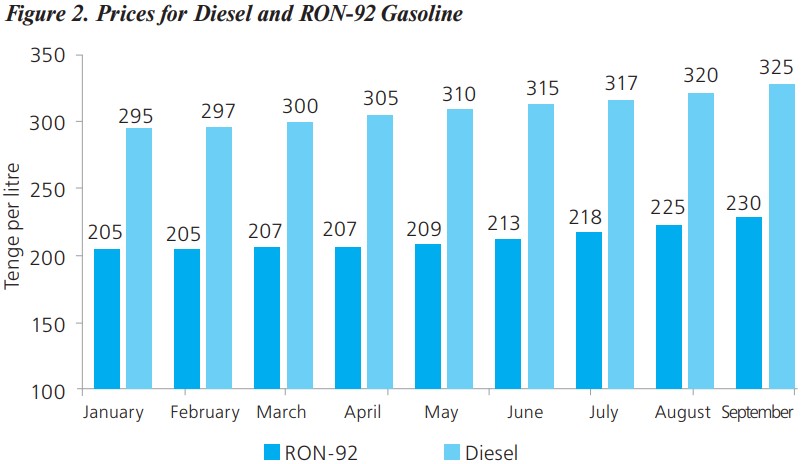
First of all, a logical increase in fuel prices is expected. To avoid a sharp spike, the government is ensuring a smooth and steady transition to market-based prices through KazMunayGas and KC Energy. Over the course of nine months, diesel prices increased by 10 percent and gasoline prices by 12 percent. According to analysts’ forecasts, prices are expected to continue rising until 2026 and approach the levels seen in Russia.
Figure 2. The government, through KazMunayGas and KC Energy Group, is ensuring a smooth transition to market-based pricing. The wholesale price is increasing by 5,000–6,000 KZT per ton (10–12 USD) per month
The removal of price controls will also help stabilize supply and reduce fuel shortages.
- Prices will become market-based, creating an incentive to supply fuel to remote regions of the country.
- “Grey exports” will decrease.
- There will be an incentive to develop fuel trading on the exchange.
Impact on the Regional Market
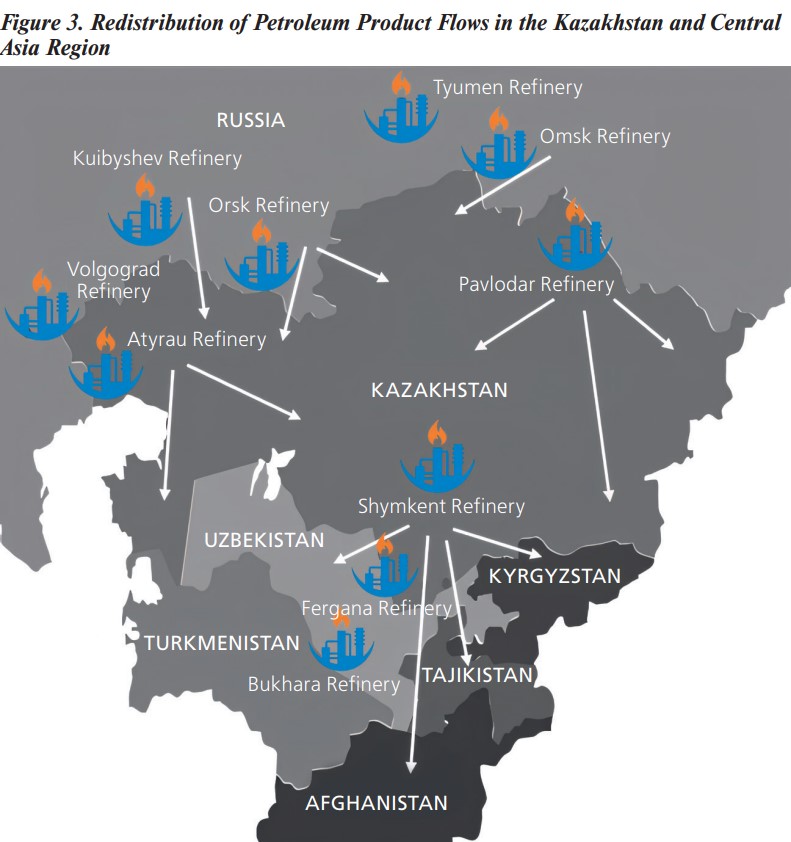
The removal of price regulation will lead to a gradual alignment of prices with neighbouring countries. Market arbitrage will intensify, and opportunities will open up for trade within the framework of the indicative balance. A redistribution of flows within the substitution system is expected. Players in Central Asia will benefit from the reduced logistics burden.
Figure 3. Redistribution of petroleum product flows within the Kazakhstan and Central Asia region
The removal of state price regulation on petroleum products will simplify investment in refinery modernization aimed at increasing processing capacity. Active negotiations are currently underway between KazMunayGas and CNPC regarding the expansion of the Shymkent Refinery under the “6+6” formula, which envisages an increase in processing capacity from 6 mln to 12 mln tons of crude oil per year. In the long term, the government is considering the construction of a fourth refinery after 2030. These measures will enable Kazakhstan not only to eliminate its domestic shortage of light petroleum products but also to achieve stable export levels.
The cancellation of price regulation makes oil refining at local refineries more profitable for upstream companies.
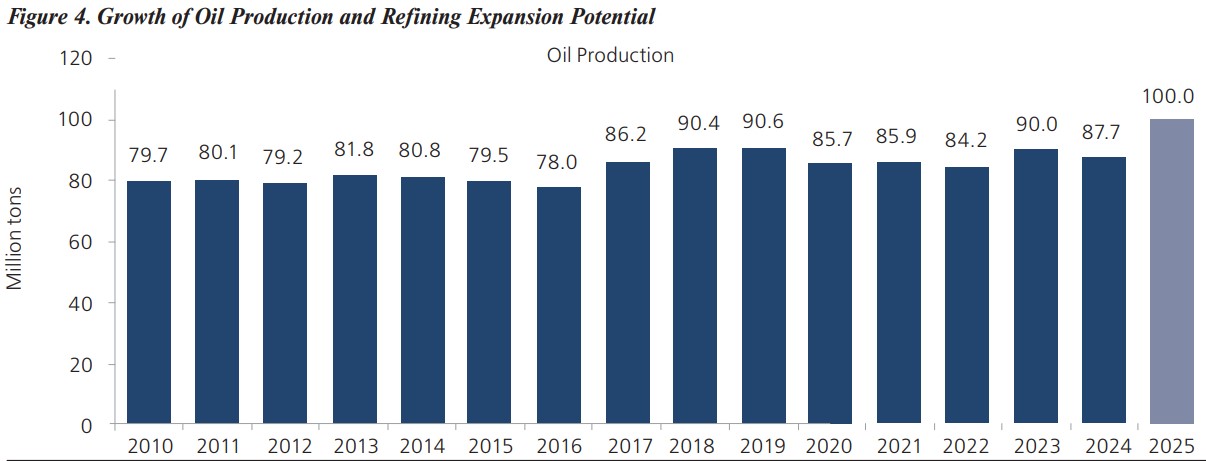
Oil production in Kazakhstan is increasing, with a record-high level of 100 mln tons forecast for 2025. The key drivers of growth are the Tengiz Expansion Project, increased output at Kashagan and Karachaganak. The production growth will expand the feedstock base for further refining.
A significant marker of the new market reality was the shipment of the first test batch of oil from Kashagan, 90 thousand tons, for processing at the Atyrau Refinery in early summer. Until recently, such domestic deliveries were more the exception than the rule. Export offered more predictable margins, and the domestic market was seen as a social obligation.
Liberalization of foreign trade is expected in 2026, including:
- export quotas; or
- full removal of the export ban.
Figure 4. Growth in Oil Production and Refining Expansion Potential
Regional Context: Toward the Formation of a Unified Fuel Market
The removal of petroleum product price controls is a crucial step toward establishing a unified fuel market.
The goal of the unified fuel market is to eliminate barriers and harmonize supply regulations for petroleum products within the framework of the Eurasian Economic Union (EAEU).
The launch of the unified petroleum products market was initially scheduled for 2025. However, due to an incomplete regulatory framework, implementation has been postponed until 2027.
The price liberalization measures initiated by the government are expected to ensure that by 2027, Kazakhstan will be prepared to begin full-scale operation within the unified fuel market of the EAEU.
Tightening Regulatory Standards Across the Sector
Over the past 15 years of our company’s presence in the market, we have witnessed and participated in numerous changes.
Compliance requirements for traders have significantly increased:
- For example, today, it is practically impossible to carry out trading activities without infrastructure such as tank farms and filling stations.
- Only subsoil users or their affiliated entities are permitted to supply crude oil to refineries for processing.
- With the transition toward a unified fuel market, only large companies with developed infrastructure and a focus on end consumers will be able to remain competitive in the future.
Conclusion
Price liberalization is not merely a step toward a market economy, but a pivotal reform that ensures the long-term sustainability of the entire petroleum products supply chain.
RV-Oil&Gas supports the reform and is committed to contributing to the modernization of the industry and regional integration.