


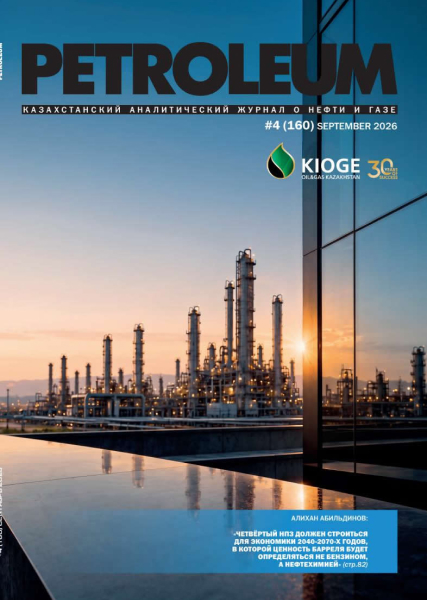
KIOGE-2026
Practically Every Strategic Issue in the Industry❜s Development Was Voiced at KIOGE

This year's KIOGE exhibition and conference is an anniversary event: it is being held in Almaty for the thirtieth time. Throughout those years, it has not merely been a meeting place for professionals; it has become a chronicle of sorts for the industry, reflecting its achievements, challenges, and hopes. On the eve of the anniversary, we are discussing the history of the exhibition and its role in the country's oil and gas complex with Uzakbay Karabalin, Hero of Labour of Kazakhstan and Deputy Chairman of the KAZENERGY Association. This interview, like the conversations with other landmark figures who stood at the origins of KIOGE and worked in close partnership with it over all these years, will be included in the Anniversary Book published by the permanent organiser of KIOGE, the exhibition company ITECA.
– Uzakbay Suleymenovich, do you remember the first time you took part in the KIOGE exhibition and conference? What year was that? What has stayed in your memory about it?
– Unfortunately, I cannot recall exactly which year it was, but I remember for certain that it was one of the first KIOGE events. The country had only just gained independence; it was a period of great expectations and of universal professional and social optimism, and you could even call it euphoria. We understood that a great deal of work lay ahead: we had to build a new country. At the same time, these were years when all the post-Soviet republics, including Russia, were facing severe economic difficulties.
But alongside this, foreign oil, service, and technology companies began to come to us, and their achievements aroused keen interest among our engineers and industry professionals. After all, over the more than 70 years of the Soviet Union's existence, we had hardly seen a single foreigner at our oilfields; the entire cycle of work, from exploration, production, and transportation to the refining of oil and gas, was carried out by our own resources. And by our own reckoning, we were achieving very good results. The statistics prove it. At the peak of its development, the Soviet Union produced around 630-650 million tons of oil. In Kazakhstan, supergiant fields had been discovered and were being developed: Tengiz produced some 3 million tons of oil, and Karachaganak approximately 4.5 million tons of gas condensate and 4 billion cubic metres of gas. All of this was done by our own specialists, without foreign participation.
After the collapse of the Union came the realisation that further production growth required new technologies we did not have, as well as newer, more efficient machinery and equipment. Times were hard, links between enterprises had been severed, and we had to make ends meet in conditions where workforces sometimes went 3-5 months without wages. But credit where it is due: despite the difficulties, the oil workers did not abandon their jobs, because all of us had been brought up with a responsible attitude to work, on which, as we understood, the future of the country depended. And it was at that time, in those conditions, that KIOGE appeared.
Thanks to it, we were able to see new technologies firsthand and feel them with our own hands. By that time, major companies had entered the industry, such as Chevron, Mobil, British Gas, and others. There was great interest in Kazakhstan; the world had already learned of its potential. The big corporations, when they came to us, brought with them an established circle of contractors, service companies, drillers, and geophysicists. Those, in turn, were eager to show us their capabilities and potential.
These days, at exhibitions, including KIOGE, many new products are shown on screens, in interactive mode. Back then, everything was brought in live because oil workers are practical people: they need to feel everything, see the size and weight, understand how the structure is put together, and so on. At that exhibition, I saw things I had previously only read about in specialist journals. For example, I was particularly struck by coiled tubing units, swivels and rotary tables, trajectory control systems for horizontal drilling, hydraulic fracturing units, drill bits with cutters made from wear-resistant synthetic alloys, and much else besides. All of this was already routine in Western companies, whereas we were seeing it for the first time.
Our specialists absorbed this new flow of information like sponges, and what they saw and touched gave rise in their minds to new creative ideas. In this way, KIOGE opened a window to the West for us, through which a great deal of modern technology, equipment, and machinery came.
Discussions quickly flared up around what we had seen, both among ourselves and with the foreigners; engineers are an inquisitive lot! In parallel, there was the conference, where specialists offering this equipment gave presentations, explaining where and how it could be applied in Kazakhstan.
I believe that the appearance of an exhibition that became a regular fixture was a very important step forward in the development of our oil and gas industry. The exhibition and conference became an annual landmark event for oil workers. All year round, we knew that in the first days of October, there would be KIOGE, and everyone tried to get there. On the one hand, it was an excellent opportunity to see something new, to consult specialists, to talk with those who already had such technology, to ask them to share their experience, and to ask questions. And besides that, it became a pleasant meeting place.
– What was the atmosphere like at those gatherings?
– I jokingly compare them to a bustling bazaar. Former classmates and fellow students, scattered by life to different corners, would gather in Almaty. Arriving here, they met joyfully and asked each other: "Where are you now? How are you? Where are you working? How is the family?" and so on. There were, of course, professional conversations on production matters, too. People began arranging meetings at KIOGE in advance, saying: “You will be there at the beginning of October, won’t you? Let us discuss everything there.” New acquaintances were formed there, and strong friendships were born. The programme provided for a three-day stay, which made it possible to communicate beyond the framework of official meetings; there was a great deal of conversation on the sidelines, in the evenings, after the working programme. KIOGE had a special aura.
Do not forget that at the time of the first exhibitions and conferences the capital was in Almaty, and all the ministries, state bodies, and agencies were there. Ministers, parliamentarians, and executives of various ranks came to the opening of the exhibition. This gave the exhibition weight; the minister would always tour the pavilions as part of a VIP tour, and everyone understood that it was an important event.
In addition, right there at KIOGE, it was possible to meet and talk to resolve work matters, for example, with officials from the relevant ministries at the level of at least a vice minister or a head of department. KIOGE provided that opportunity, and that too was important. If, for instance, it were announced that the ministers of energy, ecology, and finance would be at the conference, investors would also send an executive at the appropriate level. Not only to meet, but also to show respect for the country in which the company operates. That is the first thing.
Second, when you enter official negotiations, many things are immediately minuted, and certain commitments arise. Yet some questions first have to be felt out and understood, to see whether they are worth pursuing. And where, and how, can you feel them out? Only at informal meetings, in conversations off the record. And then, once you have thought it through and identified the paths you can take, it makes sense to launch the official process and take on commitments. And everyone greatly valued, and still values, having a venue for informal communication at a high level, such as the conference at KIOGE.

– I would agree with you that KIOGE's contribution over the years to shaping the investment climate has been considerable. Where should the exhibition and conference go from here, in what direction? Does it need to transform itself in some way?
– I think transformation is needed, and it should start first of all with geography. The capital has long been in Astana, and all the ministries and the offices of the national companies and large corporations are here. I worked in the civil service for a long time, and these days there is not much time to travel for a three-day business trip, like to KIOGE in Almaty. But if it were held in Astana, it would always be possible to find a couple of hours to drop by the exhibition, see what is new, and talk with the participants. There would be time to come to the conference. I think both the exhibition's attendance and the quality of the conference audience would benefit from this.
The composition of its participants and visitors has become noticeably younger, and practically all of them speak English, which was not the case 30 years ago. They have studied at the best universities, often abroad, and many have worked with new technologies there as well. Accordingly, the focus of their interest has shifted from learning to development: now they are more interested in how a participating company intends to improve further, and what the next stage will be. Conversations at the exhibition today are serious and professional, taking place between equals. Accordingly, KIOGE must take into account the qualifications of our oil workers.
A great many of our people work at Tengiz, Karachaganak, Kashagan, and other projects where the highest achievements of the world oil industry are applied. I will tell you this: what is used at our three megaprojects is not yet in use everywhere in the world. That, too, has to be taken into account when planning the conference programme!
The synergy of the exhibition and the conference offers great opportunities for young specialists and students, especially those pursuing doctoral studies. New ideas come to them during these meetings. It allows them not to be confined to the knowledge they already have, but to develop it and to gain more. We must move forward!
– You said that KIOGE began as a window onto the world of foreign technology. At the same time, it reflected foreign interest in investing in Kazakhstan. I think you will agree with me that the stages in the exhibition's development reflect a shift in the paradigm of that interest. The headliners of the first exhibitions were mainly Americans, then Europeans. In the 2000s, the Chinese began actively entering the industry, and large Chinese stands appeared at the exhibition. Then the Russians. And at the most recent exhibitions there have been a great many domestic companies. Does that mean the exhibition has helped domestic businesses to grow?
– Absolutely! Contacts were established at the exhibition that later grew into joint projects. Around large companies on major projects, a conglomerate of service firms immediately forms. I classify it as several circles. At the centre is a large field. Around it is a circle of world-class companies of the first technological tier, which in turn engage companies in a second circle as subcontractors, and those in a third circle for the simplest work, such as waste management, catering, transport, and so on. These third-circle companies begin working to the client's standards straight away, including occupational safety, project management, and more.
Starting in the third circle, over time, having accumulated experience and capabilities, domestic companies move into the second, that is, into a different league. Their number is growing over the years. For example, the AtyrauNefteMash plant is now making unique columns for the oil industry. There are domestic construction and IT companies that are already working in the second circle on major projects. These companies know exactly what requirements the client sets, which certificates they need to obtain to win a tender, and with whom to enter into a partnership. The fact that Kazakhstani companies of this class have emerged makes me very glad. That is the correct, sensible approach to local content.
I think that in the fortunes of manufacturers such as AtyrauNefteMash, KIOGE played a large role. Most likely, it was at the exhibition that the first introductions and negotiations took place, which then led to the partnership. That is the point of taking part, both for those who present themselves at the exhibition and for those who come to look. I think it is the shortest route to development.

– Can you recall any important projects that were presented at KIOGE? Perhaps memoranda were signed that marked the start of major projects?
– I would put it this way: practically all the major strategic issues in the industry's development were raised on this platform. People came to listen attentively to the speeches by ministers and heads of national companies because their presentations outlined prospects that are extremely important to investors. In the first place, hearing it firsthand, without any interpretation, is reliable. On the other hand, it becomes possible to understand the direction in which the agency will move, and to build one's business and one's financial and economic strategy in line with the state's strategy.
In turn, when they spoke, investors were able to convey their own aspirations and problems to state bodies. Through the platforms of KIOGE, KAZENERGY, and the Foreign Investors' Council under the Head of State. These platforms complement one another.
– To sum up: what has been the contribution of KIOGE over these years to the development of the Kazakhstani oil and gas industry?
– I believe that KIOGE has done something that may be imperceptible at first glance, but is a great thing. It helped Kazakhstani specialists to master new world-class technologies quickly and thereby to develop the industry. This platform allowed entrepreneurs and professionals to see their place in the industry, establish themselves in it, and actively press ahead towards new goals. To become not just contractors on a single project, but permanent partners for large companies. And, of course, it is a platform for creative people, including students who are learning their profession. I would wish KIOGE to continue on this course and in its high mission!