


KIOGE-2026
Improving Reliability in Refineries and Petrochemical Plants
Jacek Sadowski, Director for International Business Development, Ecol Sp. z o.o.
Wojciech Majka, CEO and Owner, Ecol Sp. z o.o.
Leszek Stoklosa, Key Account Director, Ecol Sp. z o.o.
A practical view on how a proactive approach to lubrication, oil condition monitoring and maintenance can help identify problems before they lead to failures and unplanned downtime. Taking European experience to Kazakhstan’s refining, gas-processing, petrochemical and heavy industry sectors.
Kazakhstan’s oil-refining and petrochemical sector is entering its most active investment cycle in years: planning is under way for a fourth refinery with a capacity of 10 million tonnes, existing plants are being modernised, and gas-processing and petrochemical capacity is expanding across the Atyrau, Mangystau and Pavlodar regions. Behind every one of these projects stand billions of dollars – and the same risk: a new unit that stalls in its first months after start-up because of a failure that could have been prevented.
The unit of measurement here is time. A day of unplanned downtime – on a brand-new unit or on a plant that has run for decades – is counted, by industry estimates, in hundreds of thousands of dollars, and on large complexes in millions. And it is not only lost output and an unplanned repair: it is also the reputation of a project for which you are personally accountable – to shareholders, JV partners and the market.
The good news is that this risk is manageable. The crucial point is that the decisions are made not at the moment of failure, but much earlier: when a unit is prepared and flushed before start-up, and then, in day-to-day operation, in the way lubrication and condition monitoring are organised. This is exactly where you can secure years of uptime for a fraction of the cost of a single stoppage.
THE PARTICLES YOU CAN’T SEE – AND THE BREAKDOWN EVERYONE HEARS ABOUT
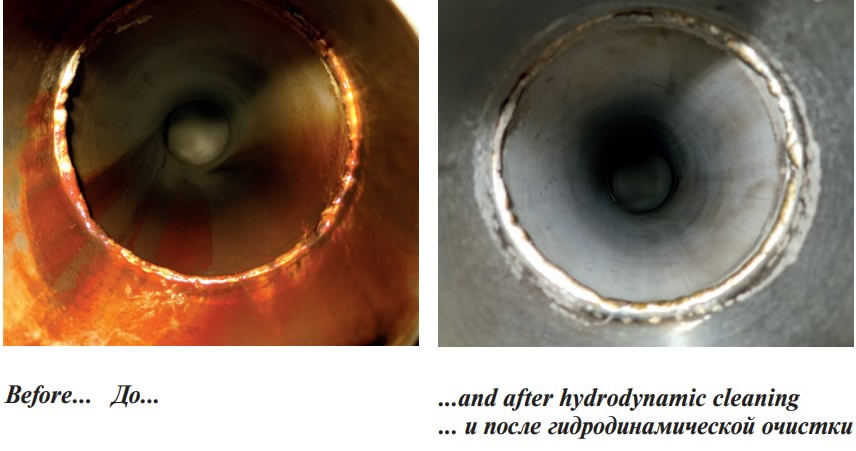
New pipework and oil systems look clean – but that is deceptive. During fabrication, transport and installation they accumulate welding slag, mill scale, rust, sand and construction debris. If this is not removed before the first start-up, the contamination settles exactly where it does the most damage: in bearings, seals, control valves and close-clearance turbomachinery. A particle a fraction of a millimetre across can score a bearing surface, or cause irreversible damage over time – turning a routine start-up into an emergency shutdown weeks or months into operation.
From this perspective the arithmetic is simple: a few days of proper high-velocity turbulent oil flushing against weeks of unplanned downtime on a new unit, lost output and emergency repairs. That is why flushing lubrication and hydraulic systems to a defined cleanliness class – before the first rotation of a turbine, compressor or pump – is treated as a mandatory step and an important milestone in any EPC contract, rather than as something left «for later».
ECOL AT A GLANCE
- Founded in 1991 in Rybnik, Poland; founder – Kazimierz Majka. Specialisation: lubrication management, oil diagnostics, pre-commissioning flushing and industrial cleaning of installations.
- International group: Ecol Sp. z o.o. (Poland) · Ecol Industrial s.r.o. (Czech Republic) · Ecol North America LLC (Florida, USA) · Proserv Sp. z o.o. – design and manufacture of lubrication and hydraulic systems (Poland) · AdMoto Sp. z o.o. – industrial reliability services (Poland).
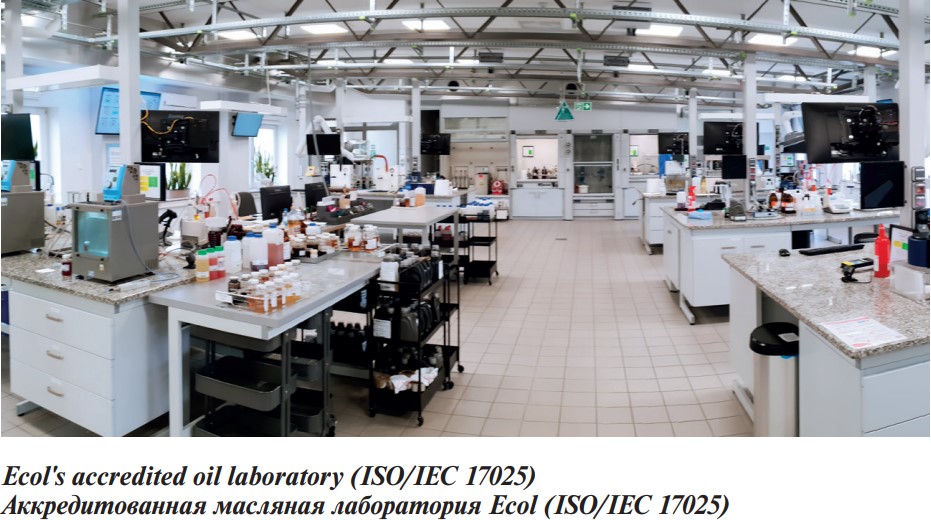
- Oil laboratory accredited to ISO/IEC 17025 (Polish Centre for Accreditation).
- Certificates: SCC Petrochemical, ISO 9001, ISO 14001, ISO 45001, WHG. Member of ICML and CGB Powertech.
- Since 1994 – Poland’s largest industrial distributor of ORLEN OIL lubricants (formerly LOTOS).
- Lubrication management at 31 sites · about 900,000 lubrication tasks a year · own Ecol System software (RFID, sensors, ultrasonic monitoring).
- References: European refineries, power plants and steelworks; ArcelorMittal, Siemens Energy. In Kazakhstan – a project for ArcelorMittal (Temirtau, 2019).
- About 450 employees.
DIAGNOSTICS THAT TURN STRAIGHT INTO ACTION
In most markets these tasks are split: one laboratory measures, another contractor flushes, and a third supplier later manages lubrication – and no single party is accountable for the outcome. In such a scenario things can go wrong, and real problems may slip through unnoticed.
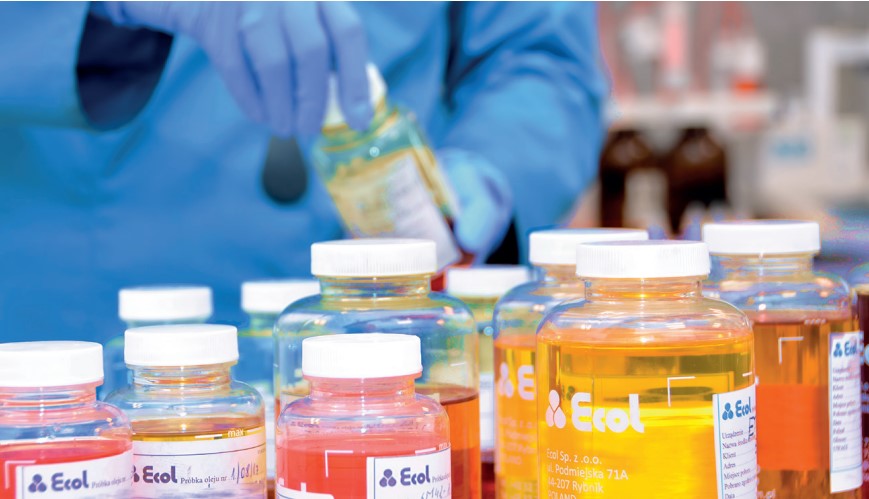
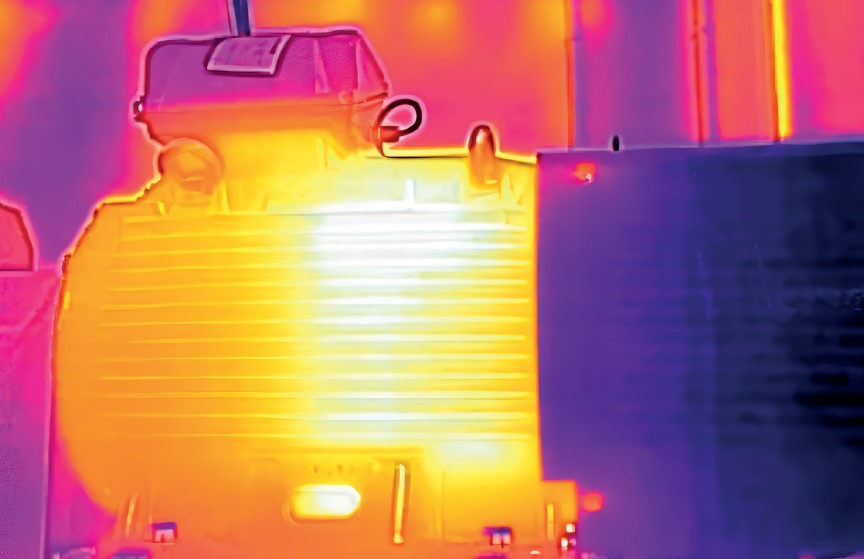
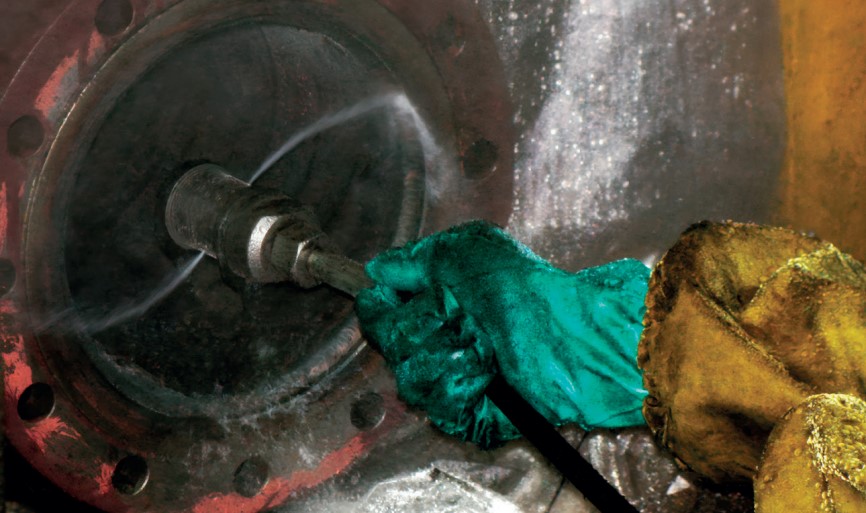
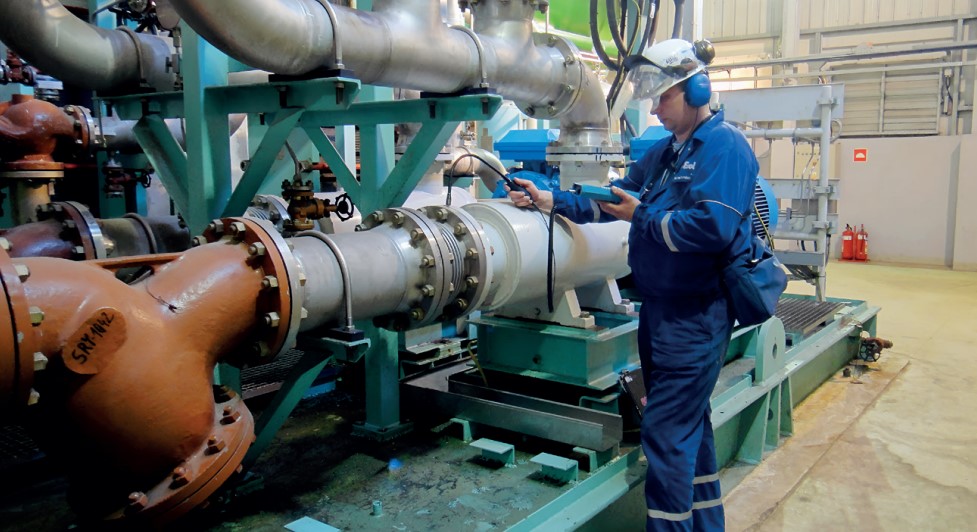
At Ecol – a European industrial-maintenance group serving the energy and petrochemical industries, based in Rybnik, Poland – it works differently. Diagnostics, flushing, cleaning and then lubrication management form one continuous process in a single pair of hands. The accredited oil laboratory (ISO/ IEC 17025) diagnoses the condition of oils and greases; the site crews take care of the proper preparation and cleanliness of oil systems, using methods matched to the specific contamination – from specialised chemical surface preparation and decontamination to high-pressure hydrodynamic cleaning and turbulent flushing. The regular day-today work then continues as lubrication management is introduced in operation.
The group’s international structure – units in Poland, the Czech Republic (Ecol Industrial) and the USA (Ecol North America) – means something simple in practice: a crew with the experience and the knowledge of best industry practice can be brought to a site in Kazakhstan, rather than assembled piece by piece on the spot. One party accountable for the result, instead of three contractors with no single owner of the process.
RELIABILITY IS BUILT IN THOUSANDS OF SMALL STEPS
A modern plant consists of thousands of components, each of which needs the same precise care and lubrication. The reliability of rotating equipment – the heart of your production – depends directly on the actual condition of the lubricant and on how well it is looked after in service. The wrong lubricant, a stretched service interval, or no sampling and analysis at all raise failure rates and hide a developing fault from the operator until the machine has already stopped.
There is a less obvious threat, too: at many companies the entire lubrication function rests on the knowledge of a single experienced technician, often close to retirement. When he leaves, reliability leaves with him. That competence must be built into a system, not into one person.
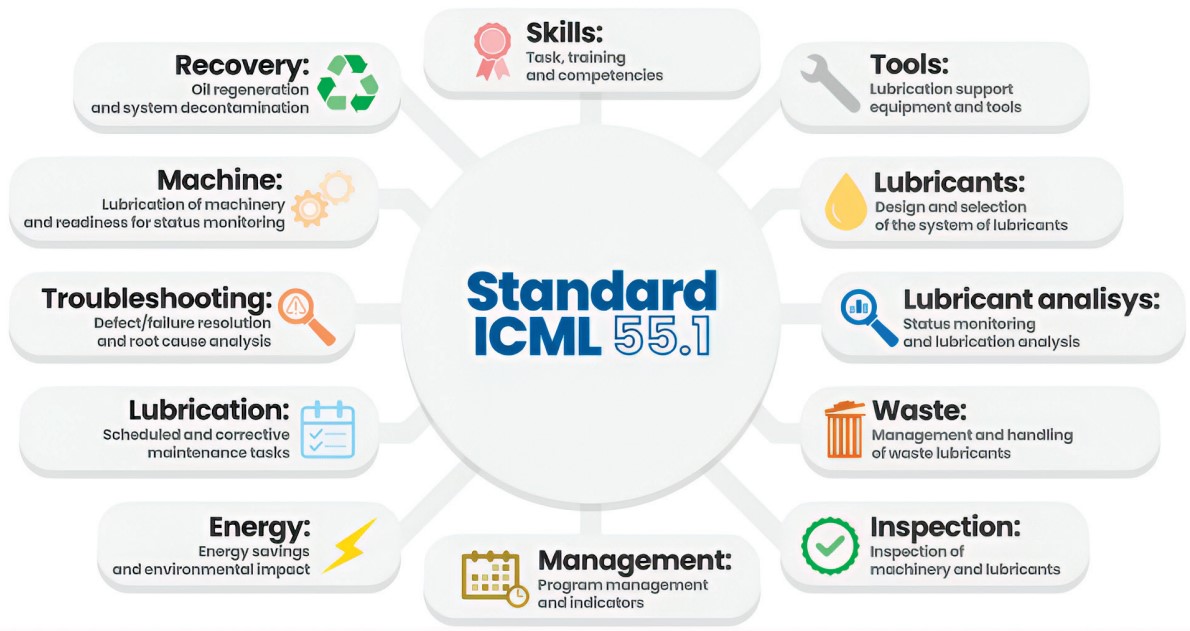
This is exactly what the international ICML 55.1.® standard for lubricated-asset management was created for: a complete approach covering reliability in all its aspects. Ecol delivers this in practice – lubrication management at 31 sites (refineries, conventional and nuclear power plants, CHP plants, paper mills and production facilities), around 900,000 lubrication tasks a year carried out with its own Ecol System software using RFID tags, sensors and ultrasonic bearing monitoring, plus personnel training and ICML certification.
It all starts small. Oil diagnostics is the entry point: a small pilot, a fast result, recommended actions, then trend-building across assets and, ultimately, expansion into a full lubrication service.
WHY A EUROPEAN PARTNER – AND WHY NOW
Ecol has been working in lubrication management, diagnostics and industrial cleaning since 1991, and has been refining its pre-commissioning flushing method since 1993 – starting with the flushing of a turbogenerator oil system during a Westinghouse-led modernisation. Behind that lie more than three decades of practice in precisely what is a critical stage for your plant.
On the Kazakhstani market, advanced services of this kind are of the highest importance. Access to an international standard therefore becomes a real advantage for the plant that secures it.
At the same time, Ecol has broad references from oil, gas and petrochemical sites: it holds the SCC Petrochemical safety certificate, ISO 9001, ISO 14001 and ISO 45001 management systems, and an oil laboratory accredited to ISO/IEC 17025 by the Polish Centre for Accreditation. That means a crew that can work alongside operating units with no compromise on safety – and diagnostics you can trust. Since 1994 Ecol has also been Poland’s largest industrial distributor of ORLEN OIL lubricants (produced at the Gdańsk refinery, formerly LOTOS), which is an advantage in turnkey projects combining service with lubricant supply.
Behind the company’s team lies experience from flushing, cleaning and lubrication-department projects at European refineries, power plants and steelworks, including work for ArcelorMittal and Siemens Energy, among many others. The company also has experience in Kazakhstan: in 2019, on an ArcelorMittal project, Ecol flushed the hydraulic system of a production line at the steelworks in Temirtau. The work was highly rated by the local customer, and Ecol gained valuable experience of the Kazakhstani market.
BETTER NOW THAN AFTER START-UP
Most of the large projects now shaping Kazakhstan’s investment agenda in refining, petrochemicals, gas processing and power are at the design and procurement stage. This is the best window: cleanliness requirements, commissioning procedures and a maintenance strategy are many times more effective to build in now than to fix after start-up. And for operating plants, oil diagnostics and a phased move to modern outsourced lubrication management are a way to cut unplanned downtime without a large upfront outlay.
If you have a new facility, a modernisation or a chronic equipmentreliability problem on the horizon, there will be a place to discuss it – come and meet Ecol. During KIOGE 2026 in Almaty (30 September - 2 October) you will hear where risk can be avoided and what the best approach to asset reliability is. Discussing it in advance is a considerably better option than fixing the consequences later.
Management / General Office of Ecol
Ul. Podmiejska 71A,
44-207 Rybnik, Poland
Tel: +48 32 739 18 30
Fax: +48 32 739 18 29
E-mail: ecol@ecol.eu www.ecol.eu