


Projects
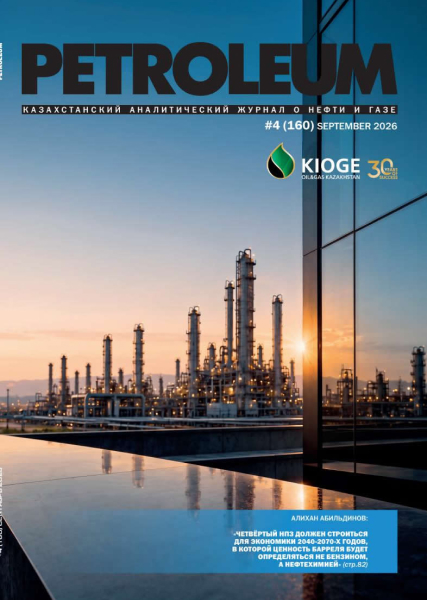
The Fourth Refinery: A Deal the Country Makes with Its Own Future for Half a Century
Alikhan Abildinov, expert in chemical technology of organic substances

On the global pivot to the crude-oil-to-chemicals (COTC) model, on a product slate that does not duplicate what has already been built, and on why the choice of site for a new plant in Kazakhstan is, first and foremost, a choice of a source of water and energy, and not of the distance to the oil field.
The construction of a fourth oil refinery with a capacity of 10 mln tons per year is currently only set out in strategic documents; the investment decision has not yet been made. The Concept for the Development of the Oil Refining Industry for 2025-2040 set the target parameters: refining depth of no less than 95%, a light product yield of no less than 88%, fuel quality no lower than K5, a share of petrochemical products of up to 50-80%, and commissioning in December 2034. In February 2026, at an expanded government meeting, the Head of State instructed that a decision be made on the new refinery, recalling the structural imbalance: the country produces around 100 mln tons of oil a year but refines only 18 mln tons. The figures have been named, and now the interesting part begins, because behind them stand three questions whose answers will determine the fate of the project for half a century ahead. What type of plant will it be? What exactly will it produce? And where will it be located?
Each of these questions is currently being discussed separately: process engineers argue over configuration, marketing specialists over the product slate, and the regions over the site. Yet this is one task, not three. The type of plant determines the product slate, the slate determines the target markets, and the markets, together with water and energy, determine the geography. Let us try to work through this chain in full, from global trends to a specific point on the map.
THE WORLD IS REASSEMBLING OIL REFINING
Fifteen years ago, the question «why build a refinery with petrochemicals» would have sounded strange: a plant was built for gasoline and diesel, and propylene from catalytic cracking was regarded as a pleasant bonus. Today, the logic has been turned upside down. The electrification of transport and rising fuel efficiency are bringing global demand for motor fuels to a plateau. In contrast, demand for petrochemical products continues to grow across the entire forecast horizon: petrochemicals, according to the International Energy Agency, are becoming the main driver of growth in oil consumption to 2050. Margins responded first: the petrochemical slate is consistently at a premium to the fuels slate, and every new large project in Asia and the Middle East is designed with chemistry in mind.
To make the discussion of the «type of plant» concrete, it is useful to break the world’s refinery fleet down into four generations, on a single simple criterion: what share of the crude processed leaves the plant as chemical products rather than fuels.
Type A is a simple-configuration fuels refinery: atmospheric distillation, reforming, and hydrotreating. There is practically no chemistry here.
Type Bis a fuel refinery with deep conversion: catalytic cracking, hydrocracking, and coking. All three operating Kazakhstani refineries, following the modernisation of 2009-2018, are classic representatives of this type: modern, but fueloriented by nature. Refining depth at them holds at 85-87% versus 94-96% for the world leaders, while the share of petrochemicals in the product slate is measured in single digits. The Atyrau refinery operates predominantly in fuels mode, although it belongs to Type C.
Type Cis an integrated complex in which a steam cracker, an aromatics complex, and polymerisation are added to the fuels scheme: from 15% to 45% of the feedstock goes into chemistry.
Finally, Type D is crude-tochemicals, COTC: a plant for which chemistry is not an appendage to fuels but the objective of the whole scheme, while fuels become a byproduct stream.
Type D is no longer a matter of isolated pilot projects but an established industry practice. China’s Hengli at Changxing (20 mln tons per year, started up in 2019) sends around 42% of its crude into chemistry; Zhejiang Petrochemical on Zhoushan Island, the world’s largest single complex at 40 mln tons, around 45-50%. In South Korea, S-Oil, together with Saudi Aramco, is completing the Shaheen project in Ulsan, using TC2C direct crude cracking technology, in which the conversion of feedstock into chemicals at the complex level reaches 70%. Reliance has announced the conversion of its giant Jamnagar site to an oil-to-chemicals strategy.
In other words, the most competitive plants in the world built over the past decade are plants of types C and D. Capital is voting the same way: on S&P Global’s estimates, around 64% of global investment in crudeto-chemicals projects is made by Asian players, while the volume of the global petrochemical market by 2033 is put at more than USD 1.1 trln.


TWO PLANTS OF THE SAME AGE: LESSONS FROM STAR AND ZHONGKE
Two operating plants with the same capacity, 10 mln tons per year, launched almost simultaneously and using different models, are particularly instructive for Kazakhstan.
Turkey’s SOCAR STAR at Aliağa (started up in 2018, with a capital investment of around USD 6.3 bln) is, at first glance, a fuels refinery: 4.8 mln tons of Euro-V-class diesel and 1.6 mln tons of jet fuel a year. But it has two features that make it a good example. First, STAR produces no commercial motor gasoline at all, and is perfectly comfortable, because it sits in a market short of diesel. Second, around a quarter of its feedstock leaves the plant as petrochemical streams: 1.6 mln tons of naphtha, 0.4 mln tons of xylenes, and 0.3 mln tons of LPG go «over the fence» to the neighbouring Petkim petrochemical complex. Integration without ownership: the refinery and the chemicals belong to the same group but live in different circuits.
China’s Sinopec Zhongke at Zhanjiang (started up in 2020, USD 5.6 bln for the first phase) went further: a steam cracker for 0.8 mln tons of ethylene and units producing polypropylene and high-density polyethylene are located inside the plant’s own circuit, while heavy residues are converted by a combination of residue hydrotreating and RFCC catalytic cracking. This is already a fully fledged Type C: fuels for the growing market in southern China, plus the first on-site polymer conversion stage.
The lesson of both projects for the fourth refinery is simple. It is possible to start with a fuel configuration, as both STAR and Zhongke did, thereby reducing the risks of the first stage. But the plant must be designed for chemistry from the outset: space, hydrogen, power, and tank farms are reserved for a future steam cracker, and the reforming scheme for an aromatics complex. An attempt to «build a fuel refinery first and then see» results, upon subsequent rebuilding, in a loss of billions. The world has already been through this mistake, and there is no need whatsoever to repeat it at a new site.
«It is possible to start with fuels, but the plant must be designed for chemistry: the reserve for a steam cracker, aromatics, and polymerisation is built into the master plan at stage zero; later it will be too late and too expensive»
THE FEEDSTOCK PROCESS ENGINEERS DREAM OF
The question of configuration cannot be discussed in isolation from the feedstock, and here Kazakhstan’s position is exceptional. A laboratory testing programme on Tengiz and Kashagan crudes (two full distillation cycles to ASTM D2892/D5236) confirmed what the market knew from the quality certificates: this is ultra-light, low-sulphur, paraffinic feedstock. Density of 47.2 and 44.9 °API, sulphur of 0.50 and 0.68 wt%, trace metals, minimal residue.
The key figure is the light products’ potential: 78.5% at Tengiz and 75.0% at Kashagan, compared with roughly 49% for a typical West Siberian export blend. The naphtha resource is 41-46% on crude, which means that at a throughput of 6-8 mln tons of light crudes, the plant has 2-3 mln tons a year of its own steam cracker feedstock. And premium feedstock at that: light naphtha, C5-65 °C, contains up to 98.6% paraffins, and the ethylene yield from it is higher than the typical 30% assumed in steam cracker balances. Heavy naphtha, 150-200 °C, with aromatics of around 20%, is ready-made reformer feedstock for the recovery of benzene and paraxylene.
The feedstock naturally has its own specifics that the scheme is obliged to take into account: the mercaptan sulphur in the gasoline and kerosene fractions requires caustic treatment, the sulphurous middle distillates require deep hydrotreating, and Kashagan diesel requires dewaxing for winter grades. But on the whole, the conclusion is unambiguous: to process such crude on a simple fuels scheme is wasteful. It might have been created for petrochemicals, and a properly designed Type C plant is capable of reliably achieving those very 50-80% of the chemistry in its output that are written into the Concept. At the same time, based on the forecasts for the country’s fuel balance, a partial output of jet fuel and diesel is necessary.


THE COUNTRY ALREADY HAS POLYETHYLENE AND POLYPROPYLENE. WHAT NEXT?
This brings us to a question that is rarely heard in discussions of the fourth refinery, although it should be asked first: what kind of chemistry, exactly, should be produced? The answer «polymers» is no longer sufficient because the basis for largetonnage polyolefins in Kazakhstan has been created or is being created without any involvement of the new plant. The KPI Inc. polypropylene plant in Atyrau, with a capacity of 500 thsd. tons per year, is operating and shipping products to Europe, Russia, Turkey, and China. The Silleno project, involving Sinopec and Sibur, will add 1.25 mln tons of polyethylene from 2029. An investment decision has been taken on butadiene and its derivatives in the Atyrau region. The gas chemical cluster in the West of the country has come into being.
Building yet another polypropylene unit at the new plant would mean competing with one’s own country in a falling market: in 2025 alone, China commissioned more than 6 mln tons of new PP capacity and, according to Argus estimates, will become a net exporter of it by the end of the decade. The logic of the fourth refinery must be different: not to duplicate the first wave but to build the second, the conversion stages that do not exist in the country or the region, based on feedstock that comes precisely from crude and not from gas.
Two items in this slate deserve separate comment. PVC, because it is a rare case of ready-made crossindustry synergy: ethylene from the new plant plus chlorine from the operating chlor-alkali site in Pavlodar close a chain that the entire Central Asian construction market currently covers with imports. And LAB, linear alkylbenzene, the basis of synthetic detergents: large-scale production exists neither in Kazakhstan nor among its neighbours, the market is entirely import-based, and the feedstock, n-paraffins from the kerosene fraction and benzene from the plant’s own reforming, is generated on-site of its own accord. A small-tonnage but high-margin product, ideally complementing the large-tonnage slate.
Taken together, this gives the country a second ethylene and aromatics hub, which can develop within a new special economic zone or as a separate petrochemical cluster in a new region.
| Chain | Products | Notes |
|---|---|---|
| Chlorine | PVC (ethylene + chlorine) | Synergy with the chlor-alkali production of Kaustik JSC in Pavlodar; the Central Asian construction boom; world market ~57 mln tons, growth ~3.6% per year |
| Detergents | LAB (linear alkylbenzene) | There is no production either in Kazakhstan or in Central Asia; the whole region relies on imports, and small enterprises in the region give no impetus to the development of household chemicals; the feedstock (n-paraffins from kerosene and benzene from reforming) is generated at the plant itself |
| Polyester | Paraxylene → PTA/PET + MEG | Heavy naphtha from Tengiz and Kashagan with ~20% aromatics is ready-made reformer feedstock; steady imports by China and Turkey |
| Phenol and oxo synthesis | Phenol, acetone, 2-ethylhexanol, butanols, acrylates | Value uplift over propylene of up to →1.9; a capacious processing market in Russia with a limited domestic product range |
| Niche | EVA, polyols | The fastest-growing segments (4-5% per year): photovoltaics and polyurethane insulation |
| Reserve | Styrene, aniline | Weak price profile (+0.5-1.5% per year); to be kept in the project as an option, not as an anchor |
MARKETS: EUROPE IS CLOSING CRACKERS, ASIA IS BUYING
The slate only makes sense together with an answer to the question of whom to sell to. And here the picture has changed dramatically over the past three years. European petrochemicals have entered a period of structural contraction: ExxonMobil’s cracker at Gravenchon has been shut down; SABIC is closing one of its crackers at Geleen; Versalis is decommissioning its crackers at Brindisi and Priolo; and other majors have announced reviews of their European assets. In all, since April 2024, the shutdown of six European crackers with a combined capacity of around 4.3 mln tons of ethylene a year has been announced. The reasons are fundamental: expensive energy, carbon regulation, the age of the capacity, and they are hardly reversible. Add regulatory constraints: the requirement for 30% recycled material in PET packaging by 2030 is holding back demand for virgin polymer. Europe remains a market for premium grades but is no longer a growth market.
The centre of gravity of demand is in the east and the south. China, for all its new capacity, maintains net imports of polyethylene at 11-12 mln tons a year and steady imports across the whole polyester chain, MEG, PET, and paraxylene; moreover, the western provinces of China are logistically closer to the Dostyk and Altynkol crossings than to the ports of their own eastern seaboard, which is a natural window for overland supplies.
Uzbekistan is increasing its polymer consumption by tens of percent and maintains zero duties; Central Asia as a whole is a fast-growing construction market for PVC and polyethylene pipe. Turkey imports more than 8 mln tons of polymer feedstock annually, and although the SOCAR STAR/Petkim pairing is gradually increasing its self-sufficiency, it is not in a position to close the gap.
Finally, naphtha itself: according to Rystad Energy’s forecasts, it is one of the two fastest-growing categories of demand for petroleum products to 2030 (alongside aviation fuel), and in optimistic scenarios, Asia faces a large-scale shortage of it. In these conditions, the plant’s own steam cracker feedstock is an asset, not a semi-finished product. The conclusion is obvious: the export vector of the future plant points east and south. The geography of demand will become one of the two main arguments in the site selection question.
WATER: THE CRITERION THAT CANNOT BE COMPENSATED FOR
An oil refinery lives for fifty years or more. A decision on the site taken in 2026 must withstand the climate of the 2050s to 2080s. And the climate forecasts for Kazakhstan are harsh: according to Kazhydromet’s model calculations, the average annual temperature will rise by 2.4- 3.1 °C by 2050, soil moisture will fall by 8-17%, and more than threequarters of the country’s territory already falls into the category of arid land. River flow has fallen by 15% relative to the 2000s level, and by 2030, the country’s water deficit is estimated at up to 23 km³. It is no accident that water policy has been raised to the highest level of the state: a new Water Code has been adopted, a dedicated ministry created, and in the 2025 Address, the President of the country called water a strategic resource, «without water there is no life», assigning the solution of water problems to the main factors of sustainable economic development and national security. Choosing a site without regard to water would, in substance, contradict this course.
Against this background, the traditional answer of «building next to the oil, in the west» looks less and less convincing. The ZhaiykCaspian basin is 62% dependent on transboundary inflow, and the flow of the Zhaiyk is declining; in Mangistau, there is no fresh water at all, only desalination. But the main point is not even hydrology; it is competition. The Atyrau region is already an established and stillgrowing industrial hub: Tengiz, the Atyrau refinery, KPI, Silleno, and the butadiene project. Every subsequent phase of the gas chemical cluster will take water, energy, and, no less scarce, engineering personnel. To place a ten-million-ton plant here as well would mean sharpening the competition for resources within a single overheated site. The south is not an alternative: the Aral-Syrdarya basin is 81% outside the country, and inflows continue to contract.
That leaves the east and the centre, the Yertis (Irtysh) basin. This is the best-provided water basin in the country: 30.9 km³ a year with a share of external inflow of only 16%; it also feeds the Kanysh Satpayev Canal, the working industrial water artery of Central Kazakhstan, where an additional abstraction for a refinery would amount to fractions of a percent of throughput capacity. The plant’s own requirement is modest, on the order of 10 mln m³ a year, a hundredth of a percent of the flow of the Yertis. The question is not one of cubic metres but of entitlement: the plant needs a guaranteed limit at 95% reliability for 40-50 years ahead, and only a basin that does not depend on the decisions of neighbouring states can give such a guarantee. There are, broadly speaking, two of these in the country: the Yertis and the Satpayev Canal system that it feeds. That is to say, Semey and Karaganda.
«A ton of finished polymer is two to three times more expensive than a ton of crude. Carrying cheap feedstock to expensive markets is more rational than the other way round; this is what the leading refineries Hengli, ZPC, and Jamnagar are built on»
THE PIPELINE IS NOT AN OBSTACLE
The main objection to the eastern vector is known in advance: «There is no oil there.» A spur of some two hundred kilometres would indeed be required from the Atasu hub to the Karaganda site, and around four hundred to Semey from the AtasuAlashankou trunk line. Should this be regarded as an obstacle? World practice answers unambiguously: no.
The Atasu-Alashankou pipeline, running just under a thousand kilometres, was built in two years. ESPO (Eastern Siberia-Pacific Ocean) in Russia stretches 4.7 thsd. km. And the world’s most profitable refining and petrochemical complexes, Hengli on Changxing Island, ZPC on Zhoushan Island, and Jamnagar in India, have no «own» crude at all: they run on tanker feedstock brought ten thousand kilometres and more from the Persian Gulf. This does not prevent them from setting world standards of efficiency, because simple economics applies: a ton of petrochemical product costs two to three times as much as a ton of crude. It is more rational to carry cheap feedstock to expensive sales markets than expensive product away from a conveniently located field.
In monetary terms, a spur to the eastern site, ranging from several tens to around 150 billion tenge, depending on the route, amounts to single-digit percentages of the capital investment in the plant itself, which, by world standards of this class, starts at USD 6-10 bln. The real question of the feedstock scheme lies not in kilometres of pipe but in confirming throughput capacity: expansion of the Kenkiyak-Atasu trunk line to 20+ mln tons a year and an official schedule for transporting the additional volumes should be the subjects of the feasibility study and negotiations with the pipeline operator.
A full cycle of expanding the linear sections of a trunk line takes about three years, so it makes sense to set up a working group with the operator today, in parallel with the site selection, rather than after the feasibility study has been approved. Distance in itself has long ceased to be an argument.

THE EASTERN VECTOR: KARAGANDA AND SEMEY
Let us put the chain back together. The type of plant: an integrated complex with provision for evolution towards crude-to-chemicals. The slate: the second wave of petrochemicals, PVC, LAB, the polyester and phenol chains, niche products. The markets: China and Central Asia. The constraint for half a century: water. All four lines converge on one part of the map, in the east and the centre of the country.
The Karaganda site rests on the waters of the Satpayev Canal and the energy of the surplus north: the Pavlodar power hub provides around 40% of the unified power system’s output, there is an operating Saryarka trunk gas pipeline nearby, the country’s largest industrial base, and three specialised technical universities. By weighted transport distance to the centres of domestic demand, Karaganda is the best point in the country: it stands exactly between the northern and southern markets.
The strategically sound and best decision on the location of the new refinery is the city of Semey: the plant will become city-forming, and taxes and excise duties will give impetus to the development of the city of Semey. Semey offers its own advantages that give serious food for thought: the best-supplied water basin in the country, a cascade of hydroelectric plants on the Yertis, a planned new CHP plant, a powerful 500 kV substation, and the shortest haul to the Chinese border crossings.
The weak points are also known: for Karaganda, it is the spare pumping capacity of the feedstock pipeline, and for Semey, the feeder pipeline through Chingiztau and a city power hub that will remain in deficit until the new CHP plant is commissioned, but these are engineering tasks with a clear price, not stop factors. A third candidate was also considered, Zhezkazgan, but it has more drawbacks: a power-deficient hub, water in question, and, above all, personnel, since it is hard for a small, remote town to attract and retain specialists. This criterion is the one most often underestimated, and yet the main resource of a refinery is people: the operating culture and the reliability of a plant fifty years ahead are determined not by licences or hardware, but by those who stand at the control panel. The choice of site is influenced by human capital: universities, the industrial environment, attractiveness for relocation, and, at the same time, the site must be regarded as a strategic and city-forming asset.
It is telling that, in terms of implementation timescales, the options are practically indistinguishable: the spread of calculated start-up dates across the sites falls within three to four months over an eight to fourteen-year horizon, within the accuracy of the estimate itself. The fate of the schedule is decided not by geography but by the pace of decision-making: between the optimistic and the conservative scenarios lie not kilometres but years spent on choosing the site, taking the investment decision, and arranging the financing. The cost of lengthy meetings and every deferred month since the project’s start is measured not only in the project’s forgone benefit but also in fractions of a percent of the country’s GDP that are not received.
An additional criterion of success here is continuity of execution: the basic design solutions should be developed by whoever will then be able to deliver a full-cycle EPC contract as well (the FEED-to-EPC model), without changing contractors halfway.
Summing up the above, it is necessary to understand that the fourth refinery is not being built to close the fuel balance for 2035; that task will be handled by the expansion of the Pavlodar petrochemical plant and the modernisation of the Shymkent refinery. It is being built for the economy of the 2040s to 2070s, in which the value of a barrel will be determined not by gasoline but by molecules. The world industry has already made this choice, from Ulsan and Zhoushan to Jamnagar and Jubail. Kazakhstan has a rare combination: feedstock that might have been created for steam cracking, growing markets next door, and a still unoccupied niche in the second wave of petrochemicals. What remains is not to trade it away for the familiar fuels scheme. A plant conceived as chemical from the start will not have to be rebuilt later. And it is in exactly this form, conceived with room to grow, that it should be handed on to the next generation of Kazakhstani engineers.
This article draws on open data from the Concept for the Development of the Oil Refining Industry of the Republic of Kazakhstan for 2025-2040, open sources, and public reports of NC KazMunayGas JSC, data from Kazhydromet and the Bureau of National Statistics of the Republic of Kazakhstan, and the author’s own calculations.
