


Oil Chronicles
Oil Chronicles. May 2026
May
May 6, QazaqGaz published a USD 1.5 bln bond programme running until the end of 2030, under which it placed a first tranche of USD 1 bln for a 1-year term at a coupon rate of 5.5% per annum. The funds raised will be used to finance the construction of the second line of the Beineu-Bozoi-Shymkent main gas pipeline. The pipeline will be 1,452 km long, with construction expected to be completed in December 2026. The project is being implemented by Beineu-Bozoi-Shymkent 2 Ltd, a company registered at the AIFC and a joint venture between QazaqGaz and Qatar's UCC Holding.
A few days later, the national gas operator raised an additional USD 700 mln through the issuance of 10-year Eurobonds at a coupon rate of 5.625% per annum. This money will likely be used to finance the construction of the gas processing plant at Karachaganak.
The former general director of the Aktau Sea Port, Abai Turikpenbayev, was released from custody in court after a trial that lasted about 6 months. In all, four people were in the dock, including the port's executive director for commercial operations and two other defendants. Turikpenbayev was initially charged with aiding and abetting, fraud, and abuse of office. However, the court found no evidence of fraud and, reclassifying the charge as negligence, handed down a sentence of two years' imprisonment with a lifetime ban on holding public office. At the same time, taking into account the time spent in pre-trial detention (on a "one day counts as two" basis), the court ordered his release from custody directly in the courtroom, because the term had effectively been served. The verdict has not entered into legal force.
The arrest, in June 2025, was carried out by officers of the National Security Committee (KNB). The head of the port had been accused of causing damage to the enterprise in providing a berth for the anchorage of a floating drilling rig, and also in the operation of oil-loading berth No. 9.
The port of Aktau is the only port through which seaborne oil exports from Kazakhstan are carried out, including to the BTC pipeline.
The ban on the export of gasoline, diesel, and liquefied petroleum gas has been extended for another 6 months. The embargo on the export of petroleum products will remain in force until November 21, 2026, and that on liquefied gas until November 14. It also applies to exports to member states of the Eurasian Economic Union. Kazakhstan is banning the export of petroleum products to rule out the risk of a domestic market shortage and outflows to neighbouring countries due to price disparities.
For liquefied petroleum gas, there are exceptions: it is permitted for export to Tengizchevroil, Zhaikmunai, and KazRosGas. Last year, TCO exported 582,540 tons of liquefied gas and Zhaikmunai 20,883 tons. Overall, LPG exports from Kazakhstan fell by 6% in 2025 amid rising domestic demand.
At the CPC Marine Terminal, preparations are underway to replace two single-point moorings that have been in operation since 2001. CPC General Director Nikolai Gorban inspected the progress of dismantling the SPM-2, which was damaged in an attack by an uncrewed boat, as well as the preparatory operations for dismantling a previously used subsea manifold, the consortium said in a statement.
A new SPM to replace the one damaged on November 29, 2025, was manufactured at Drydocks World Dubai, but its delivery to Novorossiysk took longer than expected due to sanctions and the worsening situation in the Middle East.
Ruslan Imankulov has been appointed Deputy Chairman of the Management Board of KMG PetroChem LLP, responsible for relations with state authorities, PR, and IR (Industrial Relations). Ruslan Yuryevich began his career in the emergency situations department of the Zhambyl region. Over the years, he held the post of official spokesman for the Ministry of Emergency Situations and also worked in senior media relations positions at organisations with state participation.
From October 2023 to December 2024, he headed the press service of KazMunayGas. He then moved to KMG PetroChem LLP, taking on the position of head of the service for relations with state authorities, PR, and IR.
In Kyzylorda, a meeting was held on the development of geological exploration, attended by the regional akim, Nurlybek Nalibayev, who a day later was promoted to the government, and the Chairman of the KMG Management Board, Askhat Khasenov. The discussion covered KMG’s geological exploration programme for 2026-2029, which comprises 23 projects, two of them within the region’s boundaries. Last year KMG drilled, using its own resources, the first deep well (5,585 m) at the Turgai Paleozoic block, obtaining encouraging results.
Now on the agenda is the Turgai Paleozoic No. 2 project: reprocessing of historical data, seismic surveys, and drilling to 4,500 m. Interesting information was shared about the Beles project, at which KMG plans to develop shale oil for the first time. The block is located near Kumkol, and the project provides for drilling a well to a depth of 3,500 m, with core sampling of the source rocks for subsequent geochemical studies to determine the prospects for developing shale oil.
A subsidiary of KazMunayGas, KMG-Kumkol, has completed the legal procedures to transform into KMG Digital. The stated goal is to create a single centre of IT competencies within the KMG Group. The General Director of KMG Digital is Aibol Beibitovich Bizhanov. He is a graduate of the Gumilyov Eurasian National University with a degree in international law, and of the Kazakh University of Economics, Finance and International Trade ("Economics and Business"). Over the years, he has worked at Euro-Asia Air, Astana LRT LLP, and National Information Technologies JSC.
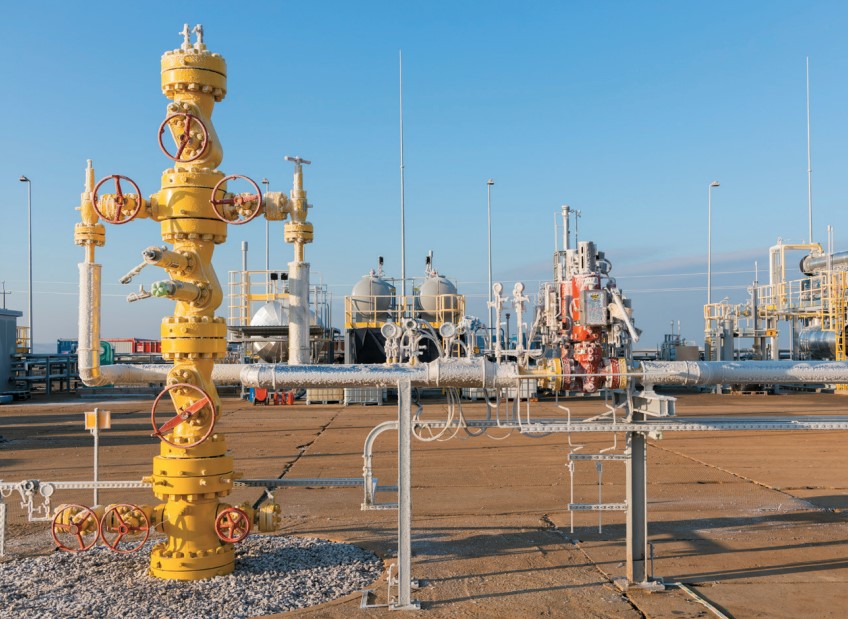
The tender for the performance of works, including the development of a feasibility study and basic engineering design (including FEED) and the development of design and estimate documentation for the project "Expansion of the Pavlodar Petrochemical Plant's refining capacity to 9 mln tons per year" was won by Eon Energo LLP, of the Mangistau region, with a contract value of 51.6 bln tenge. The completion deadline is the end of 2027.
The result of the phased implementation of the project will be an increase in refining volume to 9 mln tons per year, as well as the achievement of modern petroleum-product quality standards no lower than Euro-5 requirements. The implementation timeframe is 2025-2031.
Top-class contractors and technology licensors will take part in the project. Among them:
- Kazakhstan’s Eon Energo LLP, the general designer, will work together with the FEED developer Samsung E&A, a world leader in the field of basic design;
- Lummus Technology, developer of the process configurations;
- CLG (Chevron Lummus Global), a world leader in hydrocracking and the hydroprocessing of heavy residues;
- Haldor Topsoe, a leading supplier of catalysts and technologies for hydrogen, ammonia, methanol, and deep purification;
- Axens, one of the largest licensors for refining and petrochemicals, with a full cycle: from technologies to catalysts and modular units.