


 To increase
Archive special issue
#1 (157), February 2026
KAZAKHSTAN OILFIELD SERVICEEditor❜s Note
Buy Domestic

Buy Domestic. This slogan was first voiced in the oil and gas industry in 2009. At that time, the combined share of domestic goods and services in subsoil users’ procurement stood at just 9.3%. To fundamentally change the situation, the government submitted to Parliament a bill regulating Kazakhstani content and established the Kazakhstan Contract Agency. Around the same time, the ST-KZ certificate of origin was introduced.
Kazakhstan Oilfield Service
Rashid Zhaksylykov, Chairman of the Presidium of KazService: «For 15 Нears, We Have Been Working to Increase Kazakhstani Content»

Petroleum exclusive interview ahead of the anniversary
Last year, one could say, was among the most difficult and unstable in terms of oil production. When operators' day-to-day operations suffer, they are forced into cost-saving mode, and that, in turn, negatively affects the oilfield services sector because its economics depend directly on operators' activity. As a result, oilfield services companies spent the year in an agitated environment.
Parliamentary Audit of Oil and Gas Procurement
Kazakhstan's Parliament has turned its attention to Kazakhstani content in the procurement of oil and gas companies. Since last year, the Mazhilis Committee on Ecology and Natural Resource Use has begun summoning senior executives of major operators to report. The parliamentary chamber has become not just a venue for discussion but, in practice, a site for auditing the effectiveness of the country's industrial policy in the oil and gas sector.
The Chinese Puzzle. How to verify a Chinese supplier of industrial equipment: a checklist
Working with any supplier, especially in another country, involves many risks—for example, cases where a “large factory” turns out to be ordinary intermediaries in a small office. Drawing on many years of experience in the Chinese market, I have prepared a checklist to help assess the integrity of potential partners and avoid losses.
Karachaganak Petroleum Operating B.V. Contracts and Procurement Plan for 2026. Part 1
A consolidated table of planned procurements, including tProvision of metrological serviceshe Procurement item, the Name and brief (additional) description of the GWS to be purchased, as well as the Procurement period.
Karachaganak Petroleum Operating B.V. Contracts and Procurement Plan for 2026. Part 2
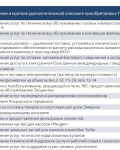
A consolidated table of planned procurements, including the Procurement item, the Name and brief (additional) description of the GWS to be purchased, as well as the Procurement period.
Expertise
Tengiz Effect 2025 – Road to (Re)negotiations

Negotiationsbetween Chevron and Kazakhstan over the concession extension (whichexpires in 2033) remain the central topic and create significant uncertainty. While discussions are underway at the highest levels, with Chevron's CEO meeting Kazakhstan's President multiple times in 2025, both parties acknowledge this will be a complex, lengthy process given the strategic importance of the asset to both the country and TCO's shareholders.
Interest on science: reset or a hidden tax? Kazakhstan has changed the mechanism for subsoil users to finance R&

Kazakhstan has changed the mechanism for subsoil users to finance R&D
As of February 23, 2026, Kazakhstan has introduced a new model for financing research and development (R&D) at the expense of subsoil users. From now on, extractive companies must transfer the mandatory 1% of their annual hydrocarbon and uranium production costs directly to the republican budget under a separate budget classification code, 401103.
The Central Asian Gas Ring: from «fast reverse» to long-term energy security for the region
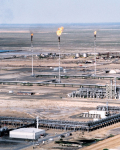
Askar Ismailov, Central Asia Adviser, The Global Gas Centre (Geneva), for Petroleum
Central Asia is entering a new cycle of energy risks, where the “gas question” is no longer a narrow sectoral issue but a condition for state resilience. The reason is simple: natural gas in the region is both an industrial feedstock and the backbone of the power system.
Projects
Karaton Subdalt: Deep Exploration as a Bet on the Future
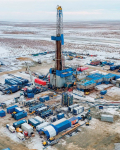
Early February brought a proof point at Karaton Subsalt. KazMunayGas confirmed that a deep well in the Atyrau Region produced a natural gas flow to the surface!
First of five
Drilling of the first exploration well to a depth of 5,750 meters was completed in December of last year. Drilling began in November 2024 and proceeded under conditions of abnormally high reservoir pressure and the presence of hydrogen sulfide (H2S).
Oil Chronicles
Oil Chronicles. November 2025
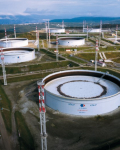
November 2025
November 1, the Orenburg Gas Processing Plant brought a second production line back online after repairs of damage caused by a UAV attack, which increased intake of raw gas from Karachaganak. As a result, oil and gas condensate production at the field rose to 30,000–32,000 tons per day from 26,600 tons during the repair period.
Oil Chronicles. December 2025
December 2025
Starting December 1, the export customs duty on crude oil in Kazakhstan decreased by another 3% from $66 to $64 per ton, versus November. In October, it was $68 per ton (down 3% from September), and in September, it fell 4% versus August. The reductions are moving in step with declines in KEBCO and Brent prices on global markets